
遗
遗 (yí) · to lose
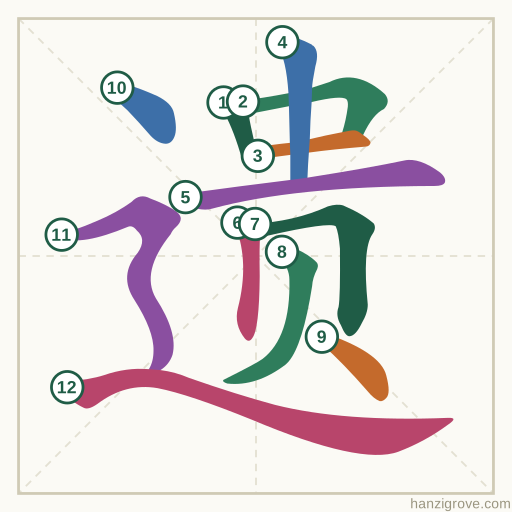
遗 (yí) means “to lose”. It is made of 辶 + 贵 and has 12 strokes.
Break 遗 into its parts
What 遗 is made of
- 辶 — walking, moving
- 贵 guì — expensive
- 中 zhōng — central
- 口 kǒu — mouth
- 丨 — vertical stroke
- 一 — horizontal stroke
- 贝 bèi — sea shell
- 冂 — frame
- 人 rén — person
- 中 zhōng — central
Origin hint: To leave 辶 something valuable 贵 behind (from the Make Me a Hanzi dataset; treat as a memory aid where history is uncertain)
遗 stroke order
Example sentences with 遗产
这座老房子是爷爷的遗产。Zhè zuò lǎo fángzi shì yéye de yíchǎn.This old house is Grandpa's inheritance.
长城是世界文化遗产。Chángchéng shì shìjiè wénhuà yíchǎn.The Great Wall is a World Cultural Heritage site.
Words with 遗
- 遗产yíchǎninheritance
- 遗传yíchuánto inherit (genetically)
- 遗憾yíhànregret
- 遗留yíliúto leave behind
- 遗失yíshīto lose
Also built with 辶
- 巡xúnto cruise
- 边biānside
- 辽liáodistant
- 达dáto reach
- 迁qiānto shift
- 迄qìto extend
- 迅xùnquick
- 过guòto pass
- 迈màito step
- 迎yíngto welcome
- 运yùnto run
- 近jìnnear
Quick facts
| Pinyin | yí |
|---|---|
| Meaning | to lose |
| Strokes | 12 |
| Radical | 辵 (walk, #162) |
| Pattern | Bottom-left wrap |
Questions about 遗
What does 遗 mean?
遗 (yí) means “to lose”.
How many strokes does 遗 have?
遗 has 12 strokes.
What is the radical of 遗?
The radical of 遗 is 辵 (chuò, “walk”), Kangxi radical number 162.
What parts make up 遗?
遗 is made of 辶 (walking, moving) and 贵 (expensive).
Keep learning
Start with HSK 1 · Group 1: 10 words with quick checks and spaced repeats.