
闯
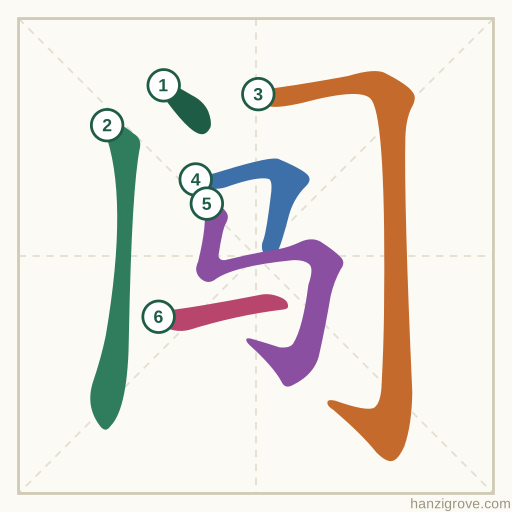
闯 (chuǎng) means “to rush”. It is made of 门 + 马 and has 6 strokes, and is an old HSK 5 word (HSK 2.0).
Break 闯 into its parts
What 闯 is made of
- 门 mén — gate
- 丶 — dot
- 丨 — vertical stroke
- 马 mǎ — horse
- 一 — horizontal stroke
闯 stroke order
Example sentences
他闯红灯被罚款了。Tā chuǎng hóngdēng bèi fákuǎn le.He was fined for running a red light.
年轻人应该出去闯一闯。Niánqīng rén yīnggāi chūqu chuǎng yī chuǎng.Young people should go out and try their luck.
Also built with 门
- 们menplural suffix
- 闪shǎnto dodge
- 闭bìto shut
- 问wènto ask
- 闲xiánfence
- 间jiānmeasure word for rooms
- 闷mèngloomy
- 闹nàonoisy
- 闻wénto smell
- 阂héseparated
- 阅yuèto examine
- 阐chǎnto disclose
Quick facts
| Pinyin | chuǎng |
|---|---|
| Meaning | to rush; to charge; to break through |
| Strokes | 6 |
| Pattern | Open at the bottom |
| HSK | Old HSK 5 |
Questions about 闯
What does 闯 mean?
闯 (chuǎng) means “to rush; to charge; to break through”.
How many strokes does 闯 have?
闯 has 6 strokes.
What parts make up 闯?
闯 is made of 门 (gate) and 马 (horse).
Which HSK level is 闯?
闯 is in Old HSK 5.
Learn 闯 with its group
It is part of Old HSK 5 · Group 16: a short group with quick checks and spaced repeats.