
除
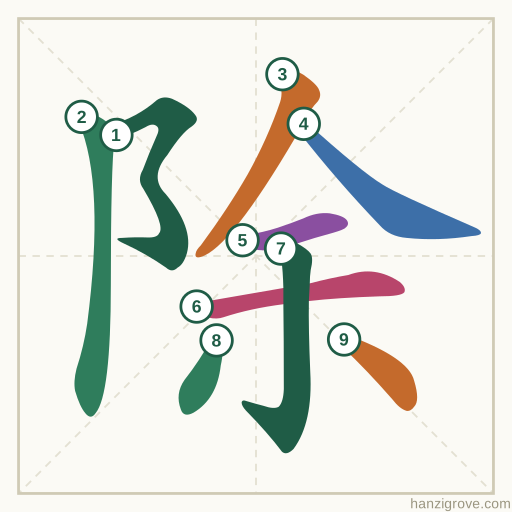
除 (chú) means “to remove”. It is made of 阝 + 余 and has 9 strokes, and is an old HSK 6 word (HSK 2.0).
Break 除 into its parts
What 除 is made of
- 阝 fù / yì (names) — mound/city side-form
- 丨 — vertical stroke
- 余 yú — surplus
- 人 rén — person
Origin hint: The waste 余 produced by a city 阝 (from the Make Me a Hanzi dataset; treat as a memory aid where history is uncertain)
除 stroke order
Example sentences
除了他,大家都来了。Chú le tā, dàjiā dōu lái le.Everyone came except him.
十除以二等于五。Shí chú yǐ èr děngyú wǔ.Ten divided by two is five.
Words with 除
- 除了chúleexcept
- 除非chúfēiunless
- 除夕ChúxīChinese New Year's Eve
- 删除shānchúto delete
- 废除fèichúto abolish
- 解除jiěchúto remove
- 开除kāichúto expel
- 排除páichúto remove
- 清除qīngchúto clear away
- 消除xiāochúto remove
Also built with 阝
- 那nàthat
- 邮yóumail
- 邻línneighbor
- 郁yùmelancholy
- 郊jiāosuburbs
- 郎lánggentleman
- 郑zhèngstate in today's Henan
- 部bùdepartment
- 都dōuall
- 鄙bǐrustic
- 队duìteam
- 阱jǐngtrap
Quick facts
| Pinyin | chú |
|---|---|
| Meaning | to remove; except; to divide |
| Strokes | 9 |
| Radical | 邑 (city, #163) |
| Pattern | Left–right |
| HSK | Old HSK 6 |
Questions about 除
What does 除 mean?
除 (chú) means “to remove; except; to divide”.
How many strokes does 除 have?
除 has 9 strokes.
What is the radical of 除?
The radical of 除 is 邑 (yì, “city”), Kangxi radical number 163.
What parts make up 除?
除 is made of 阝 (mound/city side-form) and 余 (surplus).
Which HSK level is 除?
除 is in Old HSK 6.
Learn 除 with its group
It is part of Old HSK 6 · Group 31: a short group with quick checks and spaced repeats.