
陪
陪 (péi) means “to accompany”. It is made of 阝 + 咅 and has 10 strokes, and is an HSK 4 word in the current exam syllabus (2025).
Break 陪 into its parts
What 陪 is made of
- 阝 fù / yì (names) — mound/city side-form
- 丨 — vertical stroke
- 咅 pǒu — to spit out
- 立 lì — to stand
- 亠 tóu — lid
- 丷 ha — kwukyel
- 一 — horizontal stroke
- 口 kǒu — mouth
- 冂 — frame
- 一 — horizontal stroke
- 立 lì — to stand
陪 stroke order
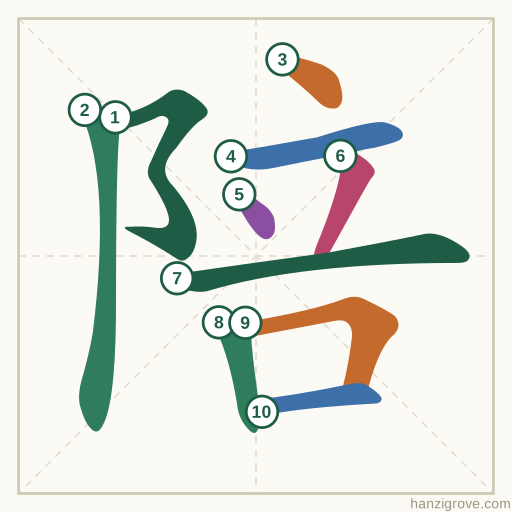
Example sentences
我陪妈妈去医院。Wǒ péi māma qù yīyuàn.I'm going to the hospital with Mom.
你能陪我去买东西吗?Nǐ néng péi wǒ qù mǎi dōngxi ma?Can you go shopping with me?
Also built with 阝
- 那nàthat
- 邮yóumail
- 邻línneighbor
- 郁yùmelancholy
- 郊jiāosuburbs
- 郎lánggentleman
- 郑zhèngstate in today's Henan
- 部bùdepartment
- 都dōuall
- 鄙bǐrustic
- 队duìteam
- 阱jǐngtrap
Quick facts
| Pinyin | péi |
|---|---|
| Meaning | to accompany; to keep sb company |
| Strokes | 10 |
| Pattern | Left–right |
| HSK | HSK 4 (exam 2025) · Old HSK 4 |
Questions about 陪
What does 陪 mean?
陪 (péi) means “to accompany; to keep sb company”.
How many strokes does 陪 have?
陪 has 10 strokes.
What parts make up 陪?
陪 is made of 阝 (mound/city side-form) and 咅 (to spit out).
Which HSK level is 陪?
陪 is in HSK 4 (exam 2025) and Old HSK 4.
Learn 陪 with its group
It is part of Old HSK 4 · Group 33: a short group with quick checks and spaced repeats.