
非
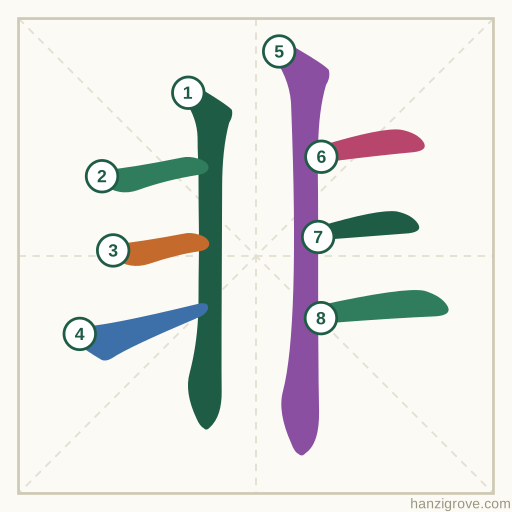
非 (fēi) means “not”. It is a single picture-like unit with 8 strokes, and is an HSK 4 word in the 2021 standard.
Break 非 into its parts
What 非 is made of
非 is not built from smaller parts; it is written with 8 strokes.
Origin hint: Two bird's wings opposed; two people back-to-back (from the Make Me a Hanzi dataset; treat as a memory aid where history is uncertain)
非 stroke order
Example sentences
非工作人员不能进入。Fēi gōngzuò rényuán bù néng jìnrù.Staff only; no entry for others.
这部电影我非看不可。Zhè bù diànyǐng wǒ fēi kàn bù kě.I simply have to see this film.
Words with 非
Quick facts
| Pinyin | fēi |
|---|---|
| Meaning | not; non-; must (非…不可) |
| Strokes | 8 |
| Radical | 非 (wrong, #175) |
| Pattern | Left–right |
| HSK | HSK 4 (2021) · Old HSK 5 |
Questions about 非
What does 非 mean?
非 (fēi) means “not; non-; must (非…不可)”.
How many strokes does 非 have?
非 has 8 strokes.
What is the radical of 非?
The radical of 非 is 非 (fēi, “wrong”), Kangxi radical number 175.
Which HSK level is 非?
非 is in HSK 4 (2021) and Old HSK 5.
Learn 非 with its group
It is part of HSK 4 (2021) · Group 36: a short group with quick checks and spaced repeats.