
骨
骨 (gǔ) · bone
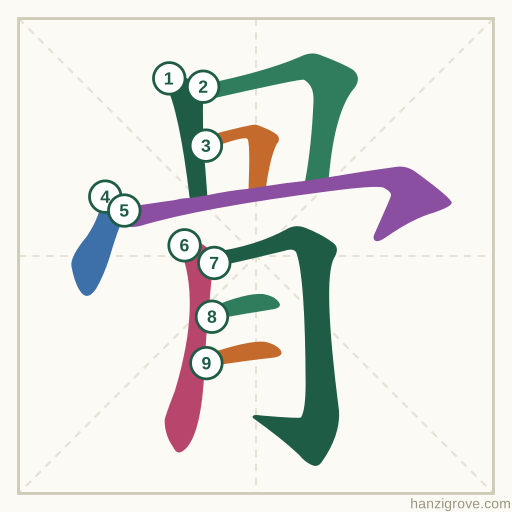
骨 (gǔ) means “bone”. It is made of 冎 + ⺼ and has 9 strokes.
Break 骨 into its parts
What 骨 is made of
- 冎 guǎ — bone
- 冂 — frame
- 丨 — vertical stroke
- 冂 — frame
- ⺼ — meat
Origin hint: Flesh ⺼ and bones 冎 (from the Make Me a Hanzi dataset; treat as a memory aid where history is uncertain)
骨 stroke order
Example sentences with 骨头
狗喜欢吃骨头。Gǒu xǐhuan chī gǔtou.Dogs like to eat bones.
多喝牛奶对骨头好。Duō hē niúnǎi duì gǔtou hǎo.Drinking plenty of milk is good for your bones.
Words with 骨
Quick facts
| Pinyin | gǔ |
|---|---|
| Meaning | bone |
| Strokes | 9 |
| Radical | 骨 (bone, #188) |
| Pattern | Open at the bottom |
Questions about 骨
What does 骨 mean?
骨 (gǔ) means “bone”.
How many strokes does 骨 have?
骨 has 9 strokes.
What is the radical of 骨?
The radical of 骨 is 骨 (gǔ, “bone”), Kangxi radical number 188.
What parts make up 骨?
骨 is made of 冎 (bone) and ⺼ (meat).
Keep learning
Start with HSK 1 · Group 1: 10 words with quick checks and spaced repeats.