
Chinese character for brother: 兄弟 (xiōngdì)
The Chinese word for brother is 兄弟 (xiōngdì). It means brothers, older and younger together, and also close male friends, as in 好兄弟 (hǎo xiōngdì, good buddy). In daily speech 哥哥 (gēge) is older brother and 弟弟 (dìdi) is younger brother.
How 兄弟 is built
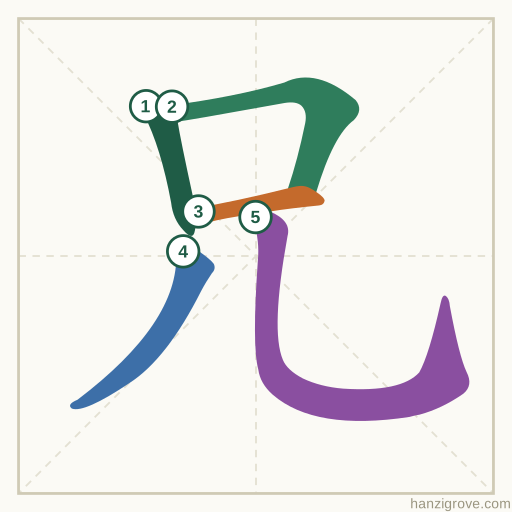
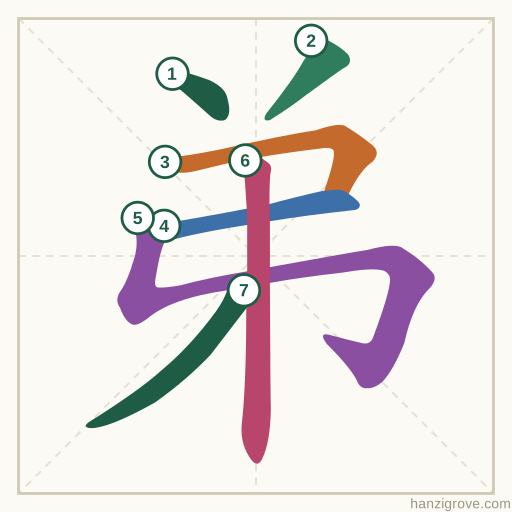
兄 (xiōng) has 口 (mouth) above 儿 (legs of a person): a standard explanation is the elder brother who speaks for and guides the younger ones. 弟 (dì) is an old picture of a cord wound in order around a stick, which gave the idea of sequence and so the younger brother. Together, 兄弟 is the elder and the younger: brothers. Both are identical in simplified and traditional Chinese.
兄 xiōng · elder brother
- 口kǒu — mouth
- 冂 — frame
- 丨 — vertical stroke
- 一 — horizontal stroke
- 冂 — frame
- 儿ér — child
- 丿 — falling stroke
- 乚 — hook stroke
Origin hint: Older brother 儿 speaking 口 to younger ones (from the Make Me a Hanzi dataset; treat as a memory aid where history is uncertain)
弟 dì · young brother
- 丷ha — kwukyel
- 丶 — dot
- 弓gōng — bow
How 兄弟 is used
Other ways to say brother
- 哥哥 gēge — older brother
- 弟弟 dìdi — younger brother
Before you use it as a tattoo or design: 兄弟 is identical in both scripts and is often used for loyal friends as well as real brothers.
Questions
What is the Chinese character for brother?
兄弟 (xiōngdì) means “brothers”.
How do you pronounce 兄弟?
兄弟 is pronounced xiōngdì.