
Chinese character for earth: 土 (tǔ)
The Chinese character for earth is 土 (tǔ). It means soil, earth and land and is the Earth element of the five elements. It appears in 土地 (tǔdì, land) and 泥土 (nítǔ, soil). For the planet Earth, Chinese says 地球 (dìqiú).
How 土 is built
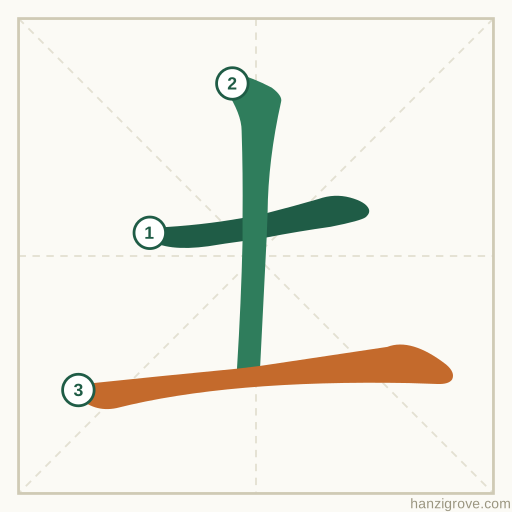
土 is a pictograph usually explained as a mound or lump of soil standing on the ground: the bottom line is the ground and the upper part is the heap of earth. It is easy to confuse with 士 (shì, scholar); in 土 the bottom line is longer, in 士 the top line is longer. As a part of other characters it marks soil and land, as in 地 (ground) and 城 (city wall).
土 tǔ · soil
- 十 — ten
- 一 — horizontal stroke
- 丨 — vertical stroke
- 一 — horizontal stroke
Origin hint: A lump of clay on a potter's wheel (from the Make Me a Hanzi dataset; treat as a memory aid where history is uncertain)
How 土 is used
Other ways to say earth
- 地 dì — ground, land; used in 天地 (heaven and earth)
- 地球 dìqiú — planet Earth
Before you use it as a tattoo or design: Keep the bottom line of 土 longer than the top, otherwise it becomes 士 (scholar).
Questions
What is the Chinese character for earth?
土 (tǔ) means “earth”.
How do you pronounce 土?
土 is pronounced tǔ.