
Chinese character for zero: 零 (líng)
The Chinese character for zero is 零 (líng). It means zero and is used when reading numbers aloud, as in 一零一 (yī líng yī, one-zero-one). In handwriting and dates the circle 〇 is also used for zero.
How 零 is built
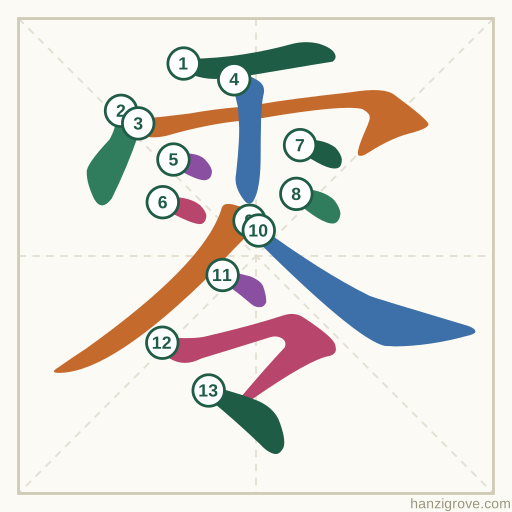
零 has the rain radical 雨 on top and 令 (lìng) below, which gives the sound. Its first meaning was light, scattered rain, drizzle falling in small drops. From 'small scattered bits' it came to mean odd remainders, and finally zero. As a memory aid, zero is like the last tiny drops of rain: almost nothing. It is identical in simplified and traditional Chinese.
零 líng · zero
- 雨yǔ — rain
- 帀zā — to rotate
- 一 — horizontal stroke
- 巾jīn — cloth
- 帀zā — to rotate
- 令lìng — command
- 人rén — person
Origin hint: 雨 gives the meaning, 令 gives the sound. (from the Make Me a Hanzi dataset; treat as a memory aid where history is uncertain)
How 零 is used
Other ways to say zero
- 〇 líng — circle used for zero in dates and written numbers
Before you use it as a tattoo or design: 零 is identical in both scripts; for a date or number tattoo, check whether you want 零 or the simple circle 〇.
Questions
What is the Chinese character for zero?
零 (líng) means “zero”.
How do you pronounce 零?
零 is pronounced líng.