
乏
乏 (fá) · poor
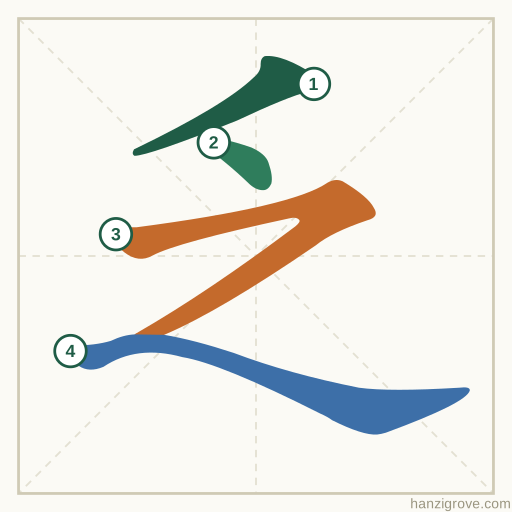
4 strokesTop–bottom
乏 (fá) means “poor”. It is made of 丿 + 之 and has 4 strokes.
Break 乏 into its parts
What 乏 is made of
- 丿 — falling stroke
- 之 zhī — marks preceding phrase as modifier of following phrase
- 丶 — dot
乏 stroke order
Example sentences with 缺乏
他缺乏工作经验。Tā quēfá gōngzuò jīngyàn.He lacks work experience.
这个地区缺乏干净的水。Zhège dìqū quēfá gānjìng de shuǐ.This area is short of clean water.
Words with 乏
Also built with 丿
- 么meinterrogative particle
- 乌wūcrow
- 乎hūinterrogative or exclamatory final particle
- 乒pīngused with pong for ping pong
- 九jiǔnine
- 儿érchild
- 几jǐhow many
- 刀dāoknife
- 力lìstrength
- 千qiānthousand
- 午wǔnoon
- 失shīto lose
Quick facts
| Pinyin | fá |
|---|---|
| Meaning | poor |
| Strokes | 4 |
| Pattern | Top–bottom |
Questions about 乏
What does 乏 mean?
乏 (fá) means “poor”.
How many strokes does 乏 have?
乏 has 4 strokes.
What parts make up 乏?
乏 is made of 丿 (falling stroke) and 之 (marks preceding phrase as modifier of following phrase).
Keep learning
Start with HSK 1 · Group 1: 10 words with quick checks and spaced repeats.