
失
失 (shī) · to lose
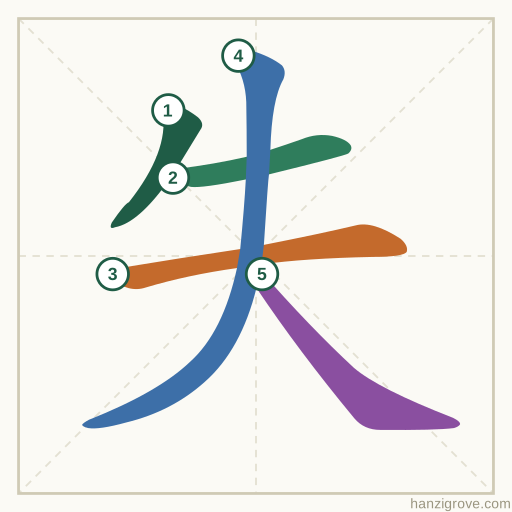
失 (shī) means “to lose”. It is made of 丿 + 夫 and has 5 strokes.
Break 失 into its parts
What 失 is made of
- 丿 — falling stroke
- 夫 fū — man
- 一 — horizontal stroke
- 大 dà — big
- 一 — horizontal stroke
- 人 rén — person
Origin hint: Something 丿 falling from a hand 夫 (from the Make Me a Hanzi dataset; treat as a memory aid where history is uncertain)
失 stroke order
Example sentences with 失去
他失去了工作。Tā shīqù le gōngzuò.He lost his job.
遇到困难不要失去信心。Yù dào kùnnan bù yào shīqù xìnxīn.Don't lose confidence when you meet difficulties.
Words with 失
- 失去shīqùto lose
- 消失xiāoshīto disappear
- 失败shībàito fail
- 失望shīwàngdisappointed
- 失业shīyèto lose one's job
- 失眠shīmiáninsomnia
- 损失sǔnshīloss
- 得不偿失débùchángshīthe gains don't make up for the losses
- 过失guòshīfault
- 丧失sàngshīto lose
- 失事shīshìto crash
- 失误shīwùmistake
- 失踪shīzōngto go missing
- 遗失yíshīto lose
Also built with 丿
- 么meinterrogative particle
- 乌wūcrow
- 乎hūinterrogative or exclamatory final particle
- 乏fápoor
- 乒pīngused with pong for ping pong
- 九jiǔnine
- 儿érchild
- 几jǐhow many
- 刀dāoknife
- 力lìstrength
- 千qiānthousand
- 午wǔnoon
Quick facts
| Pinyin | shī |
|---|---|
| Meaning | to lose |
| Strokes | 5 |
| Radical | 大 (big, #37) |
| Pattern | Overlapping |
Questions about 失
What does 失 mean?
失 (shī) means “to lose”.
How many strokes does 失 have?
失 has 5 strokes.
What is the radical of 失?
The radical of 失 is 大 (dà, “big”), Kangxi radical number 37.
What parts make up 失?
失 is made of 丿 (falling stroke) and 夫 (man).
Keep learning
Start with HSK 1 · Group 1: 10 words with quick checks and spaced repeats.