
伤
伤 (shāng) means “injury”. It is made of 亻 + 力 and has 6 strokes, and is an HSK 3 word in the 2021 standard.
Break 伤 into its parts
What 伤 is made of
- 亻 rén — person
- 力 lì — power
- 丿 — falling stroke
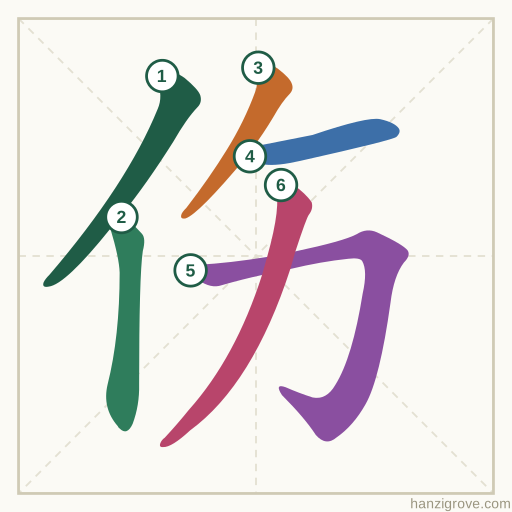
伤 stroke order
Example sentences
他的腿伤得不重。Tā de tuǐ shāng de bù zhòng.His leg isn't badly hurt.
你手上的伤好了吗?Nǐ shǒu shang de shāng hǎo le ma?Has the wound on your hand healed?
Words with 伤
Also built with 亻
- 亿yìhundred million
- 什shénwhat? mixed
- 仁rénbenevolent
- 仅jǐnonly
- 仇chóuenemy
- 仍réngstill
- 仔zǐsmall thing
- 他tāhe
- 仗zhàng1to rely upon
- 付fùto pay
- 仙xiāngod
- 代dàion behalf of
Quick facts
| Pinyin | shāng |
|---|---|
| Meaning | injury; wound; to hurt |
| Strokes | 6 |
| Radical | 人 (person, #9) |
| Pattern | Left–right |
| HSK | HSK 3 (2021) |
Questions about 伤
What does 伤 mean?
伤 (shāng) means “injury; wound; to hurt”.
How many strokes does 伤 have?
伤 has 6 strokes.
What is the radical of 伤?
The radical of 伤 is 人 (rén, “person”), Kangxi radical number 9.
What parts make up 伤?
伤 is made of 亻 (person) and 力 (power).
Which HSK level is 伤?
伤 is in HSK 3 (2021).
Learn 伤 with its group
It is part of HSK 3 (2021) · Group 22: a short group with quick checks and spaced repeats.