
伸
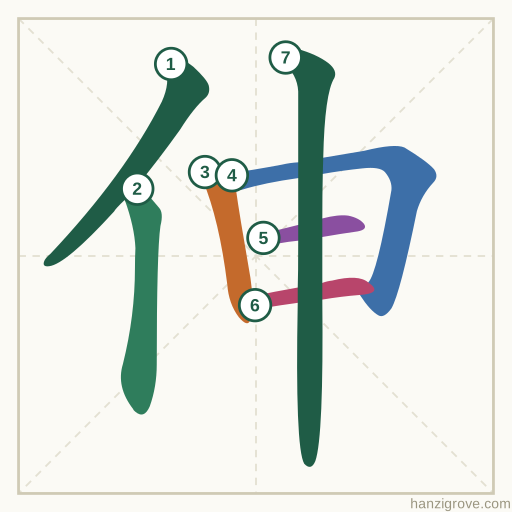
伸 (shēn) means “to stretch”. It is made of 亻 + 申 and has 7 strokes, and is an old HSK 5 word (HSK 2.0).
Break 伸 into its parts
What 伸 is made of
- 亻 rén — person
- 申 shēn — to report
- 日 rì — sun; day
- 口 kǒu — mouth
- 一 — horizontal stroke
- 丨 — vertical stroke
- 日 rì — sun; day
伸 stroke order
Example sentences
他伸出手和我握手。Tā shēn chū shǒu hé wǒ wòshǒu.He held out his hand to shake mine.
早上起床后,我先伸个懒腰。Zǎoshang qǐchuáng hòu, wǒ xiān shēn gè lǎnyāo.After getting up, I stretch first.
Words with 伸
Also built with 亻
- 亿yìhundred million
- 什shénwhat? mixed
- 仁rénbenevolent
- 仅jǐnonly
- 仇chóuenemy
- 仍réngstill
- 仔zǐsmall thing
- 他tāhe
- 仗zhàng1to rely upon
- 付fùto pay
- 仙xiāngod
- 代dàion behalf of
Quick facts
| Pinyin | shēn |
|---|---|
| Meaning | to stretch; to extend |
| Strokes | 7 |
| Pattern | Left–right |
| HSK | Old HSK 5 |
Questions about 伸
What does 伸 mean?
伸 (shēn) means “to stretch; to extend”.
How many strokes does 伸 have?
伸 has 7 strokes.
What parts make up 伸?
伸 is made of 亻 (person) and 申 (to report).
Which HSK level is 伸?
伸 is in Old HSK 5.
Learn 伸 with its group
It is part of Old HSK 5 · Group 83: a short group with quick checks and spaced repeats.