
伺
伺 (cì) · to serve
7 strokesLeft–right
伺 (cì) means “to serve”. It is made of 亻 + 司 and has 7 strokes.
Break 伺 into its parts
What 伺 is made of
- 亻 rén — person
- 司 sī — to take charge of
- 口 kǒu — mouth
- 冂 — frame
- 一 — horizontal stroke
- 口 kǒu — mouth
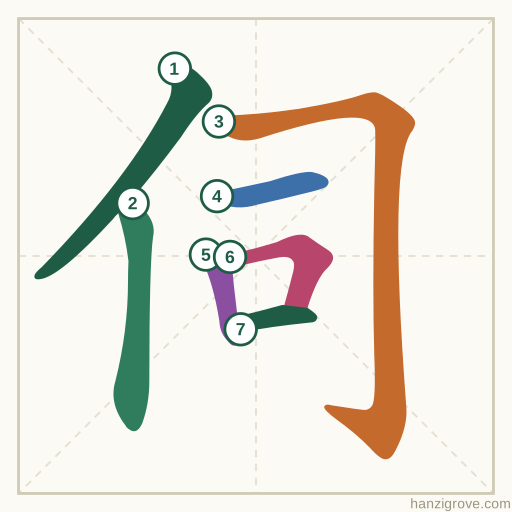
伺 stroke order
Example sentences with 伺候
她在家伺候生病的母亲。Tā zài jiā cìhou shēngbìng de mǔqīn.She stays at home looking after her sick mother.
这位客人很难伺候。Zhè wèi kèrén hěn nán cìhou.This guest is hard to please.
Words with 伺
Also built with 亻
- 亿yìhundred million
- 什shénwhat? mixed
- 仁rénbenevolent
- 仅jǐnonly
- 仇chóuenemy
- 仍réngstill
- 仔zǐsmall thing
- 他tāhe
- 仗zhàng1to rely upon
- 付fùto pay
- 仙xiāngod
- 代dàion behalf of
Quick facts
| Pinyin | cì |
|---|---|
| Meaning | to serve |
| Strokes | 7 |
| Pattern | Left–right |
Questions about 伺
What does 伺 mean?
伺 (cì) means “to serve”.
How many strokes does 伺 have?
伺 has 7 strokes.
What parts make up 伺?
伺 is made of 亻 (person) and 司 (to take charge of).
Keep learning
Start with HSK 1 · Group 1: 10 words with quick checks and spaced repeats.