
位
HSK 2 (exam 2025)HSK 2 (2021)Old HSK 3
位 (wèi) · measure word for people (polite)
位 (wèi) means “measure word for people (polite)”. It is made of 亻 + 立 and has 7 strokes, and is an HSK 2 word in the current exam syllabus (2025).
Break 位 into its parts
What 位 is made of
- 亻 rén — person
- 立 lì — to stand
- 亠 tóu — lid
- 丶 — dot
- 一 — horizontal stroke
- 丷 ha — kwukyel
- 丶 — dot
- 一 — horizontal stroke
- 亠 tóu — lid
Origin hint: The place where a person 亻 stands 立 (from the Make Me a Hanzi dataset; treat as a memory aid where history is uncertain)
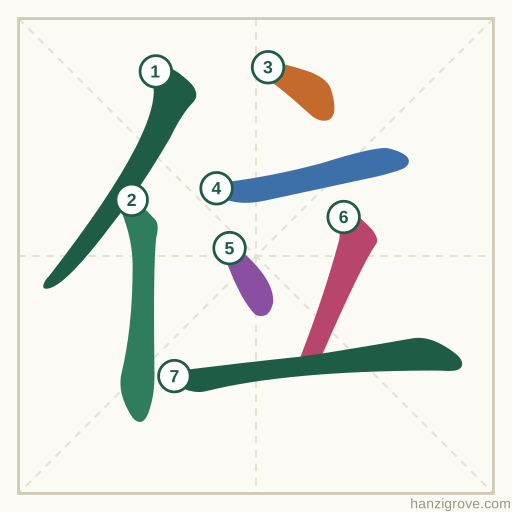
位 stroke order
Example sentences
这位是我的老师。Zhè wèi shì wǒ de lǎoshī.This is my teacher.
请问您几位?Qǐngwèn nín jǐ wèi?How many people are in your party?
Words with 位
- 单位dānwèiworkplace
- 座位zuòwèiseat
- 各位gèwèieveryone
- 地位dìwèiposition
- 位于wèiyúto be located at
- 位置wèizhiposition
- 部位bùwèipart
- 方位fāngwèidirection
- 岗位gǎngwèipost
- 学位xuéwèiacademic degree
- 职位zhíwèiposition
- 诸位zhūwèieveryone
- 车位chēwèiparking space
Also built with 亻
- 亿yìhundred million
- 什shénwhat? mixed
- 仁rénbenevolent
- 仅jǐnonly
- 仇chóuenemy
- 仍réngstill
- 仔zǐsmall thing
- 他tāhe
- 仗zhàng1to rely upon
- 付fùto pay
- 仙xiāngod
- 代dàion behalf of
Quick facts
| Pinyin | wèi |
|---|---|
| Meaning | measure word for people (polite); place; seat |
| Strokes | 7 |
| Radical | 人 (person, #9) |
| Pattern | Left–right |
| HSK | HSK 2 (exam 2025) · HSK 2 (2021) · Old HSK 3 |
Questions about 位
What does 位 mean?
位 (wèi) means “measure word for people (polite); place; seat”.
How many strokes does 位 have?
位 has 7 strokes.
What is the radical of 位?
The radical of 位 is 人 (rén, “person”), Kangxi radical number 9.
What parts make up 位?
位 is made of 亻 (person) and 立 (to stand).
Which HSK level is 位?
位 is in HSK 2 (exam 2025) and HSK 2 (2021) and Old HSK 3.
Learn 位 with its group
It is part of HSK 2 (2021) · Group 26: a short group with quick checks and spaced repeats.