
例
例 (lì) · precedent
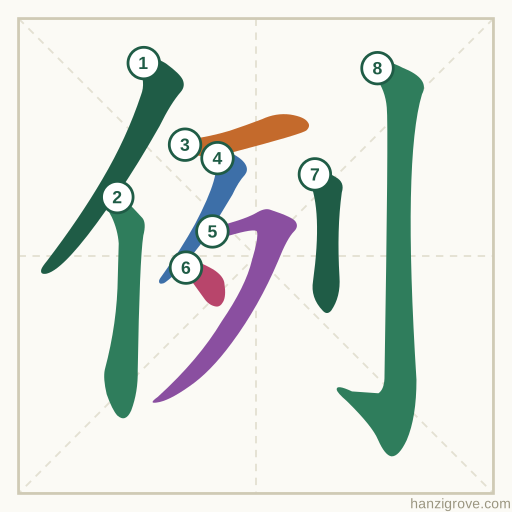
例 (lì) means “precedent”. It is made of 亻 + 列 and has 8 strokes.
Break 例 into its parts
What 例 is made of
- 亻 rén — person
- 列 liè — a line
- 歹 dǎi — corpse
- 一 — horizontal stroke
- 夕 xī — evening
- 刂 dāo — knife
- 丨 — vertical stroke
- 亅 — hook
- 歹 dǎi — corpse
Origin hint: 亻 gives the meaning, 列 gives the sound. (from the Make Me a Hanzi dataset; treat as a memory aid where history is uncertain)
例 stroke order
Example sentences with 例如
我喜欢水果,例如苹果和西瓜。Wǒ xǐhuan shuǐguǒ, lìrú píngguǒ hé xīguā.I like fruit, such as apples and watermelons.
他会很多运动,例如游泳。Tā huì hěn duō yùndòng, lìrú yóuyǒng.He can do many sports, for example swimming.
Words with 例
- 例如lìrúfor example
- 例子lìziexample
- 比例bǐlìproportion
- 案例ànlìcase
- 惯例guànlìusual practice
- 例外lìwàiexception
- 破例pòlìto make an exception
- 举例jǔlìto give an example
Also built with 亻
- 亿yìhundred million
- 什shénwhat? mixed
- 仁rénbenevolent
- 仅jǐnonly
- 仇chóuenemy
- 仍réngstill
- 仔zǐsmall thing
- 他tāhe
- 仗zhàng1to rely upon
- 付fùto pay
- 仙xiāngod
- 代dàion behalf of
Quick facts
| Pinyin | lì |
|---|---|
| Meaning | precedent |
| Strokes | 8 |
| Radical | 人 (person, #9) |
| Pattern | Left–right |
Questions about 例
What does 例 mean?
例 (lì) means “precedent”.
How many strokes does 例 have?
例 has 8 strokes.
What is the radical of 例?
The radical of 例 is 人 (rén, “person”), Kangxi radical number 9.
What parts make up 例?
例 is made of 亻 (person) and 列 (a line).
Keep learning
Start with HSK 1 · Group 1: 10 words with quick checks and spaced repeats.