
便
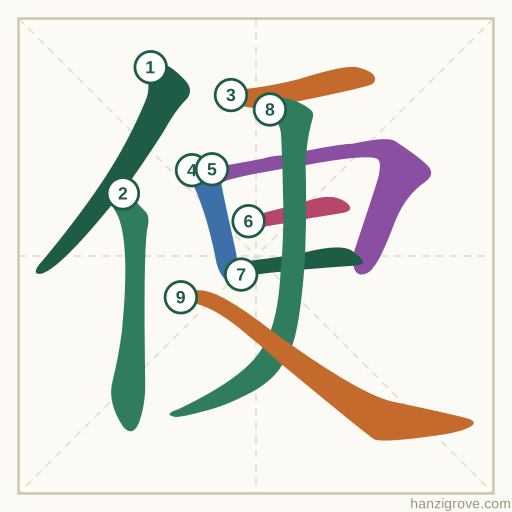
便 (biàn) means “then”. It is made of 亻 + 更 and has 9 strokes, and is an old HSK 5 word (HSK 2.0).
Break 便 into its parts
What 便 is made of
- 亻 rén — person
- 更 gèng — to change or replace
- 一 — horizontal stroke
- 曰 yuē — to speak
- 口 kǒu — mouth
- 一 — horizontal stroke
- 乂 yì — crossed strokes
- 丿 — falling stroke
便 stroke order
Example sentences
他一到家便开始做饭。Tā yī dào jiā biàn kāishǐ zuòfàn.As soon as he got home, he started cooking.
吃完早饭,我们便出发了。Chī wán zǎofàn, wǒmen biàn chūfā le.After breakfast, we set off.
Words with 便
- 方便fāngbiànconvenient
- 方便面fāngbiànmiàninstant noodles
- 便宜piányicheap
- 随便suíbiànas you like
- 顺便shùnbiànon the way
- 便利biànlìconvenient
- 便条biàntiáonote (informal written message)
- 便于biànyúeasy to
- 即便jíbiàneven if
- 以便yǐbiànso that
- 不便búbiàninconvenient
Also built with 亻
- 亿yìhundred million
- 什shénwhat? mixed
- 仁rénbenevolent
- 仅jǐnonly
- 仇chóuenemy
- 仍réngstill
- 仔zǐsmall thing
- 他tāhe
- 仗zhàng1to rely upon
- 付fùto pay
- 仙xiāngod
- 代dàion behalf of
Quick facts
| Pinyin | biàn |
|---|---|
| Meaning | then; as soon as; informal; convenient |
| Strokes | 9 |
| Radical | 人 (person, #9) |
| Pattern | Left–right |
| HSK | Old HSK 5 |
Questions about 便
What does 便 mean?
便 (biàn) means “then; as soon as; informal; convenient”.
How many strokes does 便 have?
便 has 9 strokes.
What is the radical of 便?
The radical of 便 is 人 (rén, “person”), Kangxi radical number 9.
What parts make up 便?
便 is made of 亻 (person) and 更 (to change or replace).
Which HSK level is 便?
便 is in Old HSK 5.
Learn 便 with its group
It is part of Old HSK 5 · Group 5: a short group with quick checks and spaced repeats.