
停
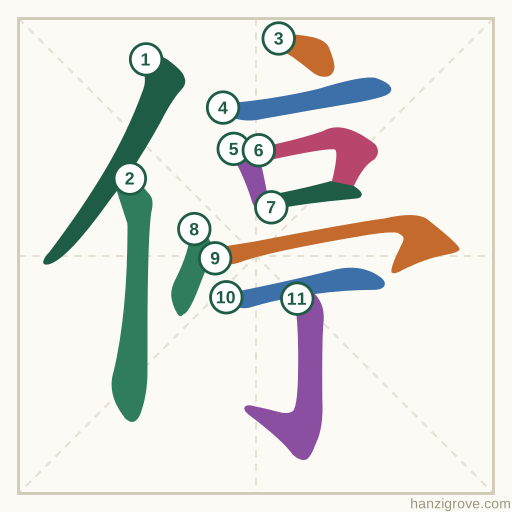
停 (tíng) means “to stop”. It is made of 亻 + 亭 and has 11 strokes, and is an HSK 4 word in the current exam syllabus (2025).
Break 停 into its parts
What 停 is made of
- 亻 rén — person
- 亭 tíng — pavilion
- 亠 tóu — lid
- 丶 — dot
- 一 — horizontal stroke
- 口 kǒu — mouth
- 冂 — frame
- 一 — horizontal stroke
- 冖 mì — cover
- 丁 dīng — male adult
- 亠 tóu — lid
Origin hint: 亻 gives the meaning, 亭 gives the sound. (from the Make Me a Hanzi dataset; treat as a memory aid where history is uncertain)
停 stroke order
Example sentences
外面的雨停了。Wàimiàn de yǔ tíng le.The rain outside has stopped.
车可以停在这儿吗?Chē kěyǐ tíng zài zhèr ma?Can the car park here?
Words with 停
- 停车tíngchēto park
- 停车场tíngchēchǎngparking lot
- 停止tíngzhǐto stop
- 停下tíngxiàto stop
- 停泊tíngbóto anchor
- 停顿tíngdùnto pause
- 停滞tíngzhìto stagnate
- 暂停zàntíngto pause
Also built with 亻
- 亿yìhundred million
- 什shénwhat? mixed
- 仁rénbenevolent
- 仅jǐnonly
- 仇chóuenemy
- 仍réngstill
- 仔zǐsmall thing
- 他tāhe
- 仗zhàng1to rely upon
- 付fùto pay
- 仙xiāngod
- 代dàion behalf of
Quick facts
| Pinyin | tíng |
|---|---|
| Meaning | to stop; to park |
| Strokes | 11 |
| Radical | 人 (person, #9) |
| Pattern | Left–right |
| HSK | HSK 4 (exam 2025) · HSK 2 (2021) · Old HSK 4 |
Questions about 停
What does 停 mean?
停 (tíng) means “to stop; to park”.
How many strokes does 停 have?
停 has 11 strokes.
What is the radical of 停?
The radical of 停 is 人 (rén, “person”), Kangxi radical number 9.
What parts make up 停?
停 is made of 亻 (person) and 亭 (pavilion).
Which HSK level is 停?
停 is in HSK 4 (exam 2025) and HSK 2 (2021) and Old HSK 4.
Learn 停 with its group
It is part of HSK 2 (2021) · Group 70: a short group with quick checks and spaced repeats.