
催
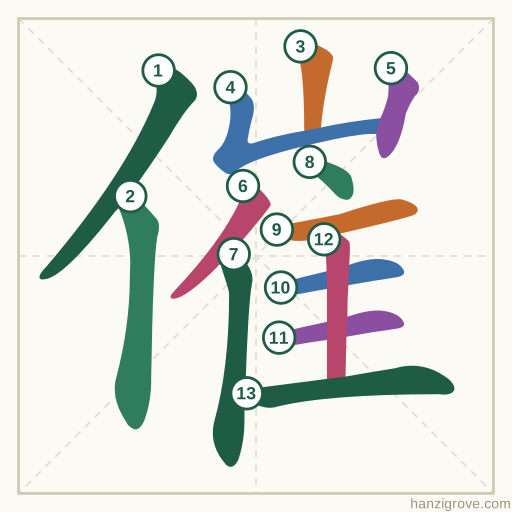
催 (cuī) means “to urge”. It is made of 亻 + 崔 and has 13 strokes, and is an old HSK 5 word (HSK 2.0).
Break 催 into its parts
What 催 is made of
- 亻 rén — person
- 崔 cuī — high
- 山 shān — mountain
- 凵 qiǎn — container
- 丨 — vertical stroke
- 隹 zhuī — short-tailed bird
- 亻 rén — person
- 山 shān — mountain
催 stroke order
Example sentences
妈妈催我快点儿起床。Māma cuī wǒ kuàidiǎnr qǐchuáng.Mom urged me to get up quickly.
别催了,我马上就好。Bié cuī le, wǒ mǎshàng jiù hǎo.Stop rushing me, I'll be ready in a moment.
Also built with 亻
- 亿yìhundred million
- 什shénwhat? mixed
- 仁rénbenevolent
- 仅jǐnonly
- 仇chóuenemy
- 仍réngstill
- 仔zǐsmall thing
- 他tāhe
- 仗zhàng1to rely upon
- 付fùto pay
- 仙xiāngod
- 代dàion behalf of
Quick facts
| Pinyin | cuī |
|---|---|
| Meaning | to urge; to hurry; to press |
| Strokes | 13 |
| Pattern | Left–right |
| HSK | Old HSK 5 |
Questions about 催
What does 催 mean?
催 (cuī) means “to urge; to hurry; to press”.
How many strokes does 催 have?
催 has 13 strokes.
What parts make up 催?
催 is made of 亻 (person) and 崔 (high).
Which HSK level is 催?
催 is in Old HSK 5.
Learn 催 with its group
It is part of Old HSK 5 · Group 18: a short group with quick checks and spaced repeats.