
免
免 (miǎn) · to spare
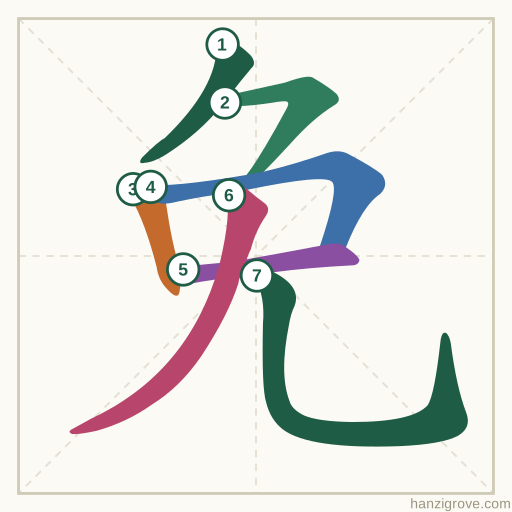
免 (miǎn) means “to spare”. It is made of ⺈ + 口 + 儿 and has 7 strokes.
Break 免 into its parts
What 免 is made of
- ⺈ — top shape
- 口 kǒu — mouth
- 冂 — frame
- 丨 — vertical stroke
- 一 — horizontal stroke
- 冂 — frame
- 儿 ér — child
- 丿 — falling stroke
- 乚 — hook stroke
免 stroke order
Example sentences with 避免
早点出发可以避免堵车。Zǎo diǎn chūfā kěyǐ bìmiǎn dǔchē.Leaving early can help you avoid traffic jams.
我们要避免这样的问题。Wǒmen yào bìmiǎn zhèyàng de wèntí.We must avoid problems like this.
Words with 免
- 避免bìmiǎnto avoid
- 免费miǎnfèifree (of charge)
- 难免nánmiǎnhard to avoid
- 不免bùmiǎnunavoidably
- 免得miǎndeso as not to
- 免疫miǎnyìimmunity
- 未免wèimiǎnrather
- 以免yǐmiǎnso as to avoid
Also built with ⺈
Quick facts
| Pinyin | miǎn |
|---|---|
| Meaning | to spare |
| Strokes | 7 |
| Radical | 儿 (legs; son, #10) |
| Pattern | Top–bottom |
Questions about 免
What does 免 mean?
免 (miǎn) means “to spare”.
How many strokes does 免 have?
免 has 7 strokes.
What is the radical of 免?
The radical of 免 is 儿 (ér, “legs; son”), Kangxi radical number 10.
What parts make up 免?
免 is made of ⺈ (top shape) and 口 (mouth) and 儿 (child).
Keep learning
Start with HSK 1 · Group 1: 10 words with quick checks and spaced repeats.