
欠
欠 (qiàn) means “to owe”. It is made of ⺈ + 人 and has 4 strokes, and is an old HSK 5 word (HSK 2.0).
Break 欠 into its parts
What 欠 is made of
- ⺈ — top shape
- 人 rén — person
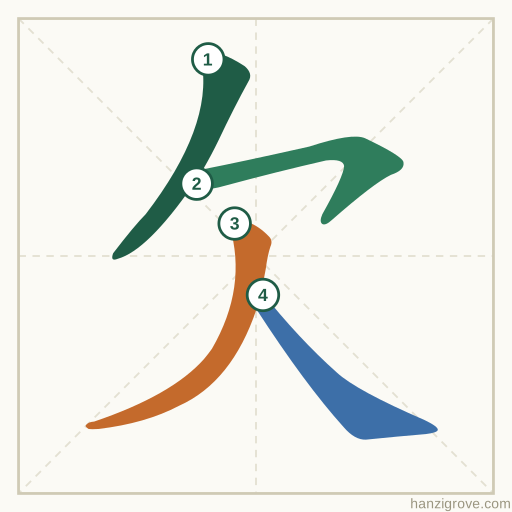
欠 stroke order
Example sentences
我还欠他一百块钱。Wǒ hái qiàn tā yìbǎi kuài qián.I still owe him a hundred yuan.
这件事我欠你一个人情。Zhè jiàn shì wǒ qiàn nǐ yī gè rénqíng.I owe you a favour for this.
Also built with ⺈
Quick facts
| Pinyin | qiàn |
|---|---|
| Meaning | to owe; to lack |
| Strokes | 4 |
| Pattern | Top–bottom |
| HSK | Old HSK 5 |
Questions about 欠
What does 欠 mean?
欠 (qiàn) means “to owe; to lack”.
How many strokes does 欠 have?
欠 has 4 strokes.
What parts make up 欠?
欠 is made of ⺈ (top shape) and 人 (person).
Which HSK level is 欠?
欠 is in Old HSK 5.
Learn 欠 with its group
It is part of Old HSK 5 · Group 74: a short group with quick checks and spaced repeats.