
呵
呵 (hē) means “to breathe out”. It is made of 口 + 可 and has 8 strokes, and is an old HSK 6 word (HSK 2.0).
Break 呵 into its parts
What 呵 is made of
- 口 kǒu — mouth
- 冂 — frame
- 丨 — vertical stroke
- 一 — horizontal stroke
- 冂 — frame
- 可 kě — may
- 丁 dīng — male adult
- 口 kǒu — mouth
- 冂 — frame
- 一 — horizontal stroke
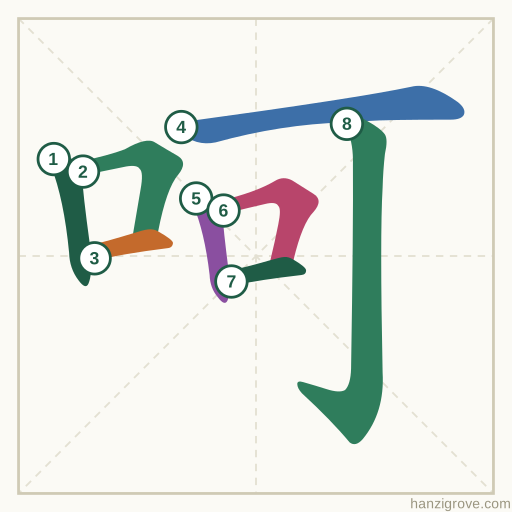
呵 stroke order
Example sentences
他往手上呵了一口气。Tā wǎng shǒu shàng hē le yì kǒu qì.He breathed on his hands.
她呵呵一笑,没有说话。Tā hēhē yí xiào, méiyǒu shuōhuà.She chuckled and said nothing.
Also built with 口
- 中zhōngmiddle
- 享xiǎngto share
- 京jīngcapital
- 亮liàngbright
- 兄xiōngelder brother
- 加jiāto add
- 占zhànto occupy
- 古gǔancient
- 句jùmeasure word for sentences
- 另lìnganother
- 叨dāotalkative
- 只zhǐonly
Quick facts
| Pinyin | hē |
|---|---|
| Meaning | to breathe out; ha (laughter) |
| Strokes | 8 |
| Pattern | Left–right |
| HSK | Old HSK 6 |
Questions about 呵
What does 呵 mean?
呵 (hē) means “to breathe out; ha (laughter)”.
How many strokes does 呵 have?
呵 has 8 strokes.
What parts make up 呵?
呵 is made of 口 (mouth) and 可 (may).
Which HSK level is 呵?
呵 is in Old HSK 6.
Learn 呵 with its group
It is part of Old HSK 6 · Group 76: a short group with quick checks and spaced repeats.