
咱
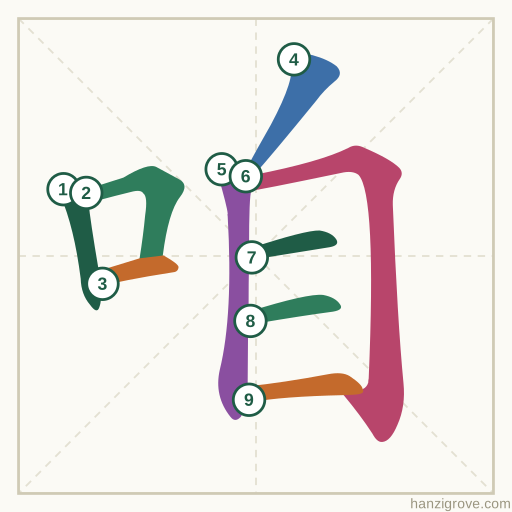
咱 (zán) means “we (including the listener)”. It is made of 口 + 自 and has 9 strokes, and is an HSK 2 word in the 2021 standard.
Break 咱 into its parts
What 咱 is made of
- 口 kǒu — mouth
- 冂 — frame
- 丨 — vertical stroke
- 一 — horizontal stroke
- 冂 — frame
- 自 zì — self
- 目 mù — eye
- 口 kǒu — mouth
- 二 — two strokes
- 目 mù — eye
Origin hint: 口 gives the meaning, 自 gives the sound. (from the Make Me a Hanzi dataset; treat as a memory aid where history is uncertain)
咱 stroke order
Example sentences
咱一起走吧。Zán yīqǐ zǒu ba.Let's go together.
咱家今天吃什么?Zán jiā jīntiān chī shénme?What's our family eating today?
Words with 咱
Also built with 口
- 中zhōngmiddle
- 享xiǎngto share
- 京jīngcapital
- 亮liàngbright
- 兄xiōngelder brother
- 加jiāto add
- 占zhànto occupy
- 古gǔancient
- 句jùmeasure word for sentences
- 另lìnganother
- 叨dāotalkative
- 只zhǐonly
Quick facts
| Pinyin | zán |
|---|---|
| Meaning | we (including the listener); I |
| Strokes | 9 |
| Radical | 口 (mouth, #30) |
| Pattern | Left–right |
| HSK | HSK 2 (2021) |
Questions about 咱
What does 咱 mean?
咱 (zán) means “we (including the listener); I”.
How many strokes does 咱 have?
咱 has 9 strokes.
What is the radical of 咱?
The radical of 咱 is 口 (kǒu, “mouth”), Kangxi radical number 30.
What parts make up 咱?
咱 is made of 口 (mouth) and 自 (self).
Which HSK level is 咱?
咱 is in HSK 2 (2021).
Learn 咱 with its group
It is part of HSK 2 (2021) · Group 1: a short group with quick checks and spaced repeats.