
哨
哨 (shào) means “whistle”. It is made of 口 + 肖 and has 10 strokes, and is an old HSK 6 word (HSK 2.0).
Break 哨 into its parts
What 哨 is made of
- 口 kǒu — mouth
- 冂 — frame
- 丨 — vertical stroke
- 一 — horizontal stroke
- 冂 — frame
- 肖 xiào — to resemble
- ⺌ — structural part
- ⺼ — meat
哨 stroke order
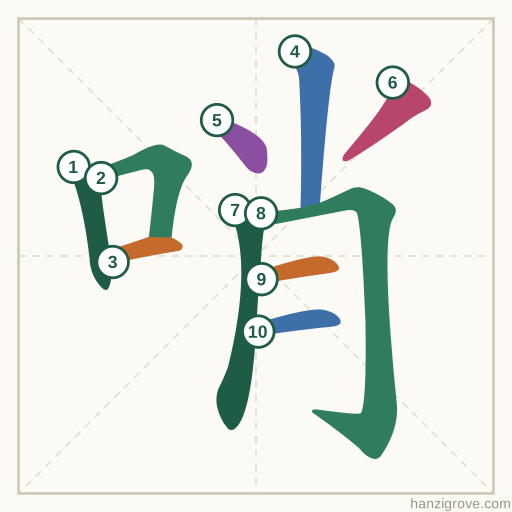
Example sentences
裁判吹了一声哨,比赛开始了。Cáipàn chuī le yīshēng shào, bǐsài kāishǐ le.The referee blew the whistle and the match began.
士兵在门口站哨。Shìbīng zài ménkǒu zhàn shào.A soldier stands sentry at the gate.
Also built with 口
- 中zhōngmiddle
- 享xiǎngto share
- 京jīngcapital
- 亮liàngbright
- 兄xiōngelder brother
- 加jiāto add
- 占zhànto occupy
- 古gǔancient
- 句jùmeasure word for sentences
- 另lìnganother
- 叨dāotalkative
- 只zhǐonly
Quick facts
| Pinyin | shào |
|---|---|
| Meaning | whistle; sentry post |
| Strokes | 10 |
| Pattern | Left–right |
| HSK | Old HSK 6 |
Questions about 哨
What does 哨 mean?
哨 (shào) means “whistle; sentry post”.
How many strokes does 哨 have?
哨 has 10 strokes.
What parts make up 哨?
哨 is made of 口 (mouth) and 肖 (to resemble).
Which HSK level is 哨?
哨 is in Old HSK 6.
Learn 哨 with its group
It is part of Old HSK 6 · Group 158: a short group with quick checks and spaced repeats.