
啃
啃 (kěn) means “to gnaw”. It is made of 口 + 肯 and has 11 strokes, and is an old HSK 6 word (HSK 2.0).
Break 啃 into its parts
What 啃 is made of
- 口 kǒu — mouth
- 冂 — frame
- 丨 — vertical stroke
- 一 — horizontal stroke
- 冂 — frame
- 肯 kěn — to agree to
- 止 zhǐ — to stop
- 上 shàng — above
- 丨 — vertical stroke
- ⺼ — meat
- 止 zhǐ — to stop
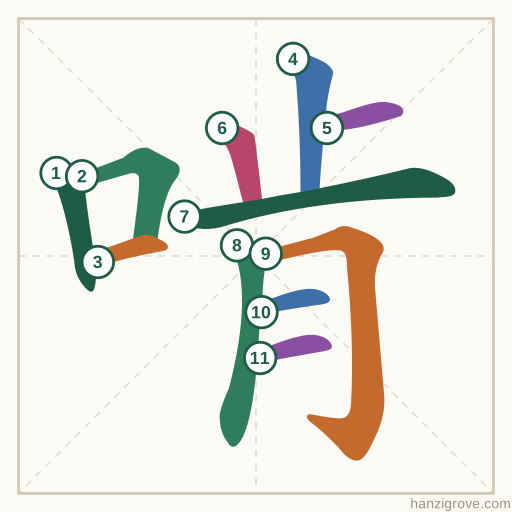
啃 stroke order
Example sentences
小狗在啃骨头。Xiǎogǒu zài kěn gǔtou.The puppy is gnawing a bone.
他一边走一边啃着苹果。Tā yìbiān zǒu yìbiān kěn zhe píngguǒ.He munched on an apple as he walked.
Also built with 口
- 中zhōngmiddle
- 享xiǎngto share
- 京jīngcapital
- 亮liàngbright
- 兄xiōngelder brother
- 加jiāto add
- 占zhànto occupy
- 古gǔancient
- 句jùmeasure word for sentences
- 另lìnganother
- 叨dāotalkative
- 只zhǐonly
Quick facts
| Pinyin | kěn |
|---|---|
| Meaning | to gnaw; to nibble; to bite |
| Strokes | 11 |
| Pattern | Left–right |
| HSK | Old HSK 6 |
Questions about 啃
What does 啃 mean?
啃 (kěn) means “to gnaw; to nibble; to bite”.
How many strokes does 啃 have?
啃 has 11 strokes.
What parts make up 啃?
啃 is made of 口 (mouth) and 肯 (to agree to).
Which HSK level is 啃?
啃 is in Old HSK 6.
Learn 啃 with its group
It is part of Old HSK 6 · Group 108: a short group with quick checks and spaced repeats.