
嚷
嚷 (rǎng) means “to shout”. It is made of 口 + 襄 and has 20 strokes, and is an old HSK 6 word (HSK 2.0).
Break 嚷 into its parts
What 嚷 is made of
- 口 kǒu — mouth
- 冂 — frame
- 丨 — vertical stroke
- 一 — horizontal stroke
- 冂 — frame
- 襄 xiāng — to aid
- 亠 tóu — lid
- 丶 — dot
- 一 — horizontal stroke
- 口 kǒu — mouth
- 冂 — frame
- 一 — horizontal stroke
- 口 kǒu — mouth
- 冂 — frame
- 一 — horizontal stroke
- 井 jǐng — well
- 二 — two strokes
- 衣 yī — cloth
- 亠 tóu — lid
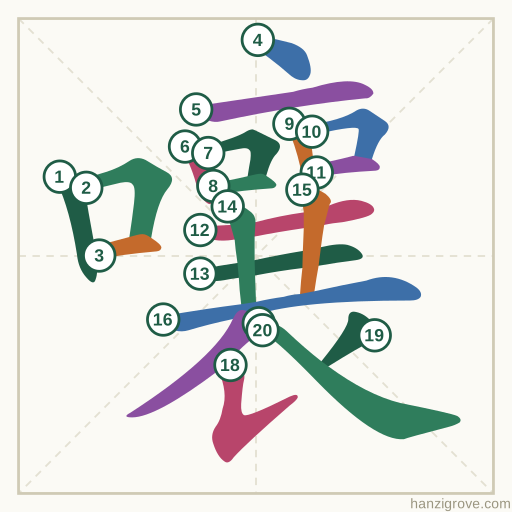
嚷 stroke order
Example sentences
别嚷了,孩子在睡觉。Bié rǎng le, háizi zài shuìjiào.Stop shouting, the child is sleeping.
他在门外大声嚷着我的名字。Tā zài ménwài dàshēng rǎng zhe wǒ de míngzi.He was yelling my name outside the door.
Also built with 口
- 中zhōngmiddle
- 享xiǎngto share
- 京jīngcapital
- 亮liàngbright
- 兄xiōngelder brother
- 加jiāto add
- 占zhànto occupy
- 古gǔancient
- 句jùmeasure word for sentences
- 另lìnganother
- 叨dāotalkative
- 只zhǐonly
Quick facts
| Pinyin | rǎng |
|---|---|
| Meaning | to shout; to yell |
| Strokes | 20 |
| Pattern | Left–right |
| HSK | Old HSK 6 |
Questions about 嚷
What does 嚷 mean?
嚷 (rǎng) means “to shout; to yell”.
How many strokes does 嚷 have?
嚷 has 20 strokes.
What parts make up 嚷?
嚷 is made of 口 (mouth) and 襄 (to aid).
Which HSK level is 嚷?
嚷 is in Old HSK 6.
Learn 嚷 with its group
It is part of Old HSK 6 · Group 152: a short group with quick checks and spaced repeats.