
孔
孔 (kǒng) means “hole”. It is made of 子 + 乚 and has 4 strokes, and is an old HSK 6 word (HSK 2.0).
Break 孔 into its parts
What 孔 is made of
- 子 zǐ — child
- 了 liǎo / le — finish
- 乛 — bent stroke
- 亅 — hook
- 一 — horizontal stroke
- 了 liǎo / le — finish
- 乚 — hook stroke
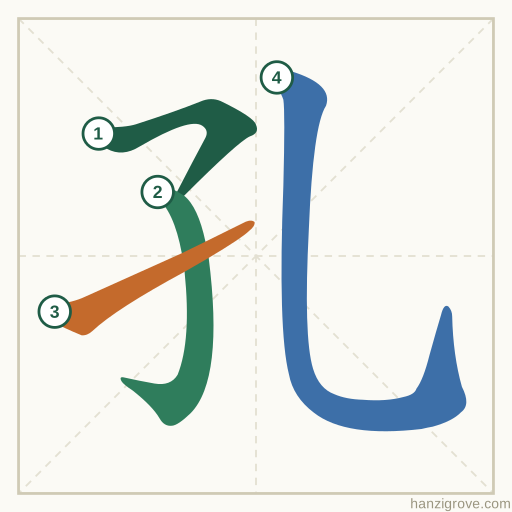
孔 stroke order
Example sentences
墙上有一个小孔。Qiáng shàng yǒu yí gè xiǎo kǒng.There's a small hole in the wall.
这种纸上有很多小孔。Zhè zhǒng zhǐ shàng yǒu hěnduō xiǎo kǒng.This paper has lots of tiny holes.
Also built with 子
- 享xiǎngto share
- 仔zǐsmall thing
- 厚hòuthick
- 好hǎogood
- 孕yùnpregnant
- 字zìcharacter
- 存cúnto save
- 孙sūngrandchild
- 孝xiàofilial piety
- 季jìseason
- 孤gūorphaned
- 学xuéto study
Quick facts
| Pinyin | kǒng |
|---|---|
| Meaning | hole; opening |
| Strokes | 4 |
| Pattern | Left–right |
| HSK | Old HSK 6 |
Questions about 孔
What does 孔 mean?
孔 (kǒng) means “hole; opening”.
How many strokes does 孔 have?
孔 has 4 strokes.
What parts make up 孔?
孔 is made of 子 (child) and 乚 (hook stroke).
Which HSK level is 孔?
孔 is in Old HSK 6.
Learn 孔 with its group
It is part of Old HSK 6 · Group 108: a short group with quick checks and spaced repeats.