
扛
扛 (káng) means “to carry on the shoulder”. It is made of 扌 + 工 and has 6 strokes, and is an old HSK 6 word (HSK 2.0).
Break 扛 into its parts
What 扛 is made of
- 扌 shǒu — hand
- 二 — two strokes
- 一 — horizontal stroke
- 一 — horizontal stroke
- 亅 — hook
- 二 — two strokes
- 工 gōng — labor
- 一 — horizontal stroke
- 丄 shàng — above
- 丨 — vertical stroke
- 一 — horizontal stroke
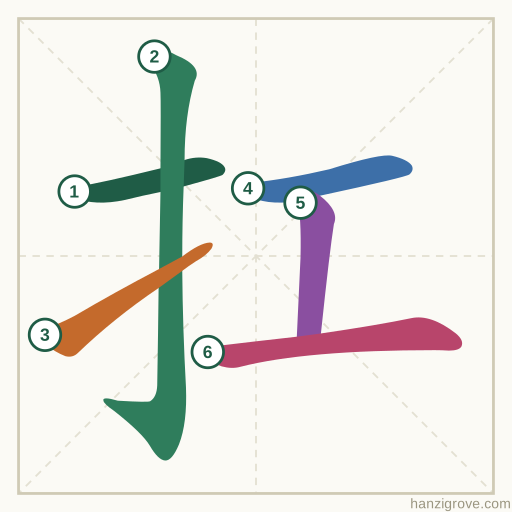
扛 stroke order
Example sentences
他扛着一袋米上楼。Tā kángzhe yí dài mǐ shàng lóu.He carried a bag of rice upstairs on his shoulder.
这么重的箱子,我扛不动。Zhème zhòng de xiāngzi, wǒ kángbudòng.This box is so heavy I can't carry it on my shoulder.
Also built with 扌
- 举jǔto raise
- 我wǒI
- 才cáitalent
- 扎zhāto prick
- 扑pūto pounce on
- 扒bāto hold on to
- 打dǎto play (ball)
- 扔rēngto throw
- 托tuōto raise
- 扣kòuto fasten
- 执zhíto execute
- 扩kuòto expand
Quick facts
| Pinyin | káng |
|---|---|
| Meaning | to carry on the shoulder |
| Strokes | 6 |
| Pattern | Left–right |
| HSK | Old HSK 6 |
Questions about 扛
What does 扛 mean?
扛 (káng) means “to carry on the shoulder”.
How many strokes does 扛 have?
扛 has 6 strokes.
What parts make up 扛?
扛 is made of 扌 (hand) and 工 (labor).
Which HSK level is 扛?
扛 is in Old HSK 6.
Learn 扛 with its group
It is part of Old HSK 6 · Group 106: a short group with quick checks and spaced repeats.