
掰
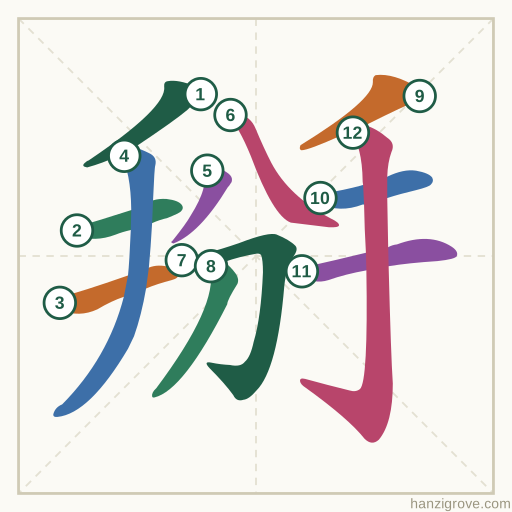
掰 (bāi) means “to break off (with fingers)”. It is made of 手 + 分 + 手 and has 12 strokes, and is an old HSK 6 word (HSK 2.0).
Break 掰 into its parts
What 掰 is made of
- 手 shǒu — hand
- 分 fēn — to divide
- 八 bā — eight
- 刀 dāo — knife
- 丿 — falling stroke
- 手 shǒu — hand
掰 stroke order
Example sentences
他把面包掰成两半。Tā bǎ miànbāo bāi chéng liǎngbàn.He broke the bread in two.
她掰着手指数日子。Tā bāi zhe shǒuzhǐ shù rìzi.She counted the days on her fingers.
Also built with 手
- 拜bàito bow
- 拳quánfist
- 拿náto take
- 挚zhìsincere
- 掌zhǎngin charge
- 摩móto scour
- 擎qíngto lift
- 攀pānto climb
- 看kànto look
Quick facts
| Pinyin | bāi |
|---|---|
| Meaning | to break off (with fingers); to break apart |
| Strokes | 12 |
| Pattern | Left–middle–right |
| HSK | Old HSK 6 |
Questions about 掰
What does 掰 mean?
掰 (bāi) means “to break off (with fingers); to break apart”.
How many strokes does 掰 have?
掰 has 12 strokes.
What parts make up 掰?
掰 is made of 手 (hand) and 分 (to divide) and 手 (hand).
Which HSK level is 掰?
掰 is in Old HSK 6.
Learn 掰 with its group
It is part of Old HSK 6 · Group 3: a short group with quick checks and spaced repeats.