
盖
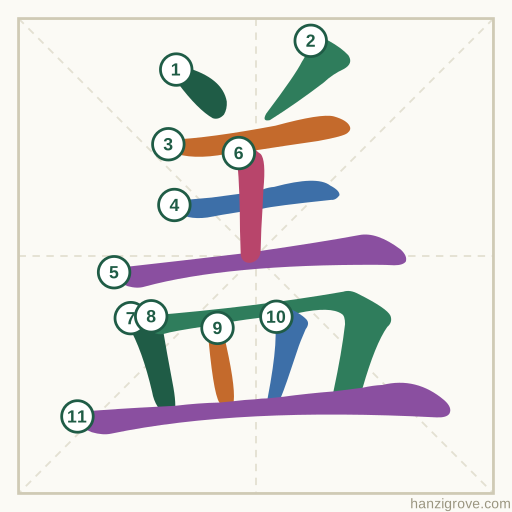
盖 (gài) means “lid”. It is made of 羊 + 皿 and has 11 strokes, and is an HSK 4 word in the 2021 standard.
Break 盖 into its parts
What 盖 is made of
- 羊 yáng — sheep
- 丷 ha — kwukyel
- 丶 — dot
- 丷 ha — kwukyel
- 皿 mǐn — dish
- 一 — horizontal stroke
Origin hint: A dish 皿 with a lid 羊 (from the Make Me a Hanzi dataset; treat as a memory aid where history is uncertain)
盖 stroke order
Example sentences
杯子的盖子在哪儿?Bēizi de gàizi zài nǎr?Where is the lid of the cup?
这里要盖一座新医院。Zhèlǐ yào gài yī zuò xīn yīyuàn.A new hospital is going to be built here.
Words with 盖
Also built with 羊
- 养yǎngto raise (animals)
- 善shàngood
- 差chàpoor
- 样yàngform
- 氧yǎngoxygen
- 洋yángsea
- 痒yǎngitchy
- 着zheongoing-state particle
- 祥xiánghappiness
- 美měibeautiful
- 羞xiūshame
- 羡xiànto envy
Quick facts
| Pinyin | gài |
|---|---|
| Meaning | lid; cover; to build |
| Strokes | 11 |
| Radical | 皿 (dish, #108) |
| Pattern | Top–bottom |
| HSK | HSK 4 (2021) · Old HSK 5 |
Questions about 盖
What does 盖 mean?
盖 (gài) means “lid; cover; to build”.
How many strokes does 盖 have?
盖 has 11 strokes.
What is the radical of 盖?
The radical of 盖 is 皿 (mǐn, “dish”), Kangxi radical number 108.
What parts make up 盖?
盖 is made of 羊 (sheep) and 皿 (dish).
Which HSK level is 盖?
盖 is in HSK 4 (2021) and Old HSK 5.
Learn 盖 with its group
It is part of HSK 4 (2021) · Group 61: a short group with quick checks and spaced repeats.