
睁
睁 (zhēng) means “to open (the eyes)”. It is made of 目 + 争 and has 11 strokes, and is an old HSK 5 word (HSK 2.0).
Break 睁 into its parts
What 睁 is made of
- 目 mù — eye
- 口 kǒu — mouth
- 冂 — frame
- 一 — horizontal stroke
- 二 — two strokes
- 一 — horizontal stroke
- 一 — horizontal stroke
- 口 kǒu — mouth
- 争 zhēng — to dispute
- ⺈ — top shape
- 彐 jì — snout
- 二 — two strokes
- 亅 — hook
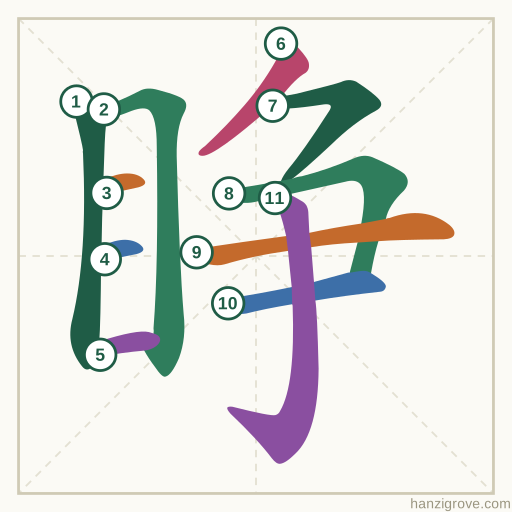
睁 stroke order
Example sentences
他睁开眼睛,发现天已经亮了。Tā zhēng kāi yǎnjing, fāxiàn tiān yǐjīng liàng le.He opened his eyes and saw it was already light.
风太大,我睁不开眼。Fēng tài dà, wǒ zhēng bù kāi yǎn.The wind is so strong I can't open my eyes.
Also built with 目
- 具jùtool
- 冒màoto risk
- 泪lèitears
- 盯dīngto stare at
- 盲mángblind
- 直zhístraight
- 相xiāngmutual
- 盼pànto look
- 省shěngto save
- 眉méieyebrows
- 看kànto look
- 眠miánsleep
Quick facts
| Pinyin | zhēng |
|---|---|
| Meaning | to open (the eyes) |
| Strokes | 11 |
| Pattern | Left–right |
| HSK | Old HSK 5 |
Questions about 睁
What does 睁 mean?
睁 (zhēng) means “to open (the eyes)”.
How many strokes does 睁 have?
睁 has 11 strokes.
What parts make up 睁?
睁 is made of 目 (eye) and 争 (to dispute).
Which HSK level is 睁?
睁 is in Old HSK 5.
Learn 睁 with its group
It is part of Old HSK 5 · Group 121: a short group with quick checks and spaced repeats.