
睡
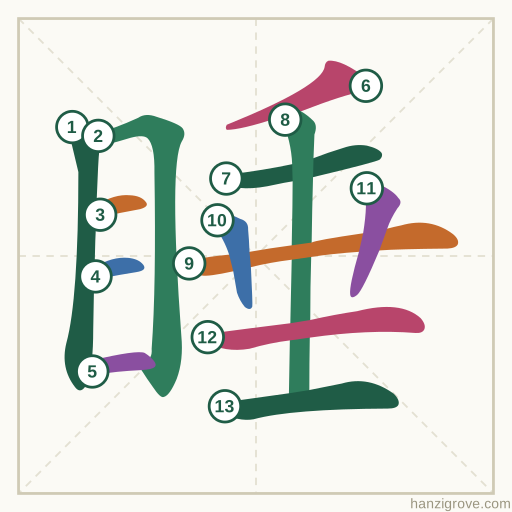
睡 (shuì) means “to sleep”. It is made of 目 + 垂 and has 13 strokes, and is an HSK 1 word in the current exam syllabus (2025).
Break 睡 into its parts
What 睡 is made of
- 目 mù — eye
- 口 kǒu — mouth
- 冂 — frame
- 一 — horizontal stroke
- 二 — two strokes
- 一 — horizontal stroke
- 一 — horizontal stroke
- 口 kǒu — mouth
- 垂 chuí — to hang
- 士 shì — scholar
- 卄 niàn — twenty
- 十 — ten
- 丨 — vertical stroke
Origin hint: 目 gives the meaning, 垂 gives the sound. (from the Make Me a Hanzi dataset; treat as a memory aid where history is uncertain)
睡 stroke order
Example sentences
我晚上十点睡。Wǒ wǎnshang shí diǎn shuì.I go to bed at ten at night.
你昨天睡得好吗?Nǐ zuótiān shuì de hǎo ma?Did you sleep well last night?
Words with 睡
Also built with 目
- 具jùtool
- 冒màoto risk
- 泪lèitears
- 盯dīngto stare at
- 盲mángblind
- 直zhístraight
- 相xiāngmutual
- 盼pànto look
- 省shěngto save
- 眉méieyebrows
- 看kànto look
- 眠miánsleep
Quick facts
| Pinyin | shuì |
|---|---|
| Meaning | to sleep |
| Strokes | 13 |
| Radical | 目 (eye, #109) |
| Pattern | Left–right |
| HSK | HSK 1 (exam 2025) · HSK 1 (2021) |
Questions about 睡
What does 睡 mean?
睡 (shuì) means “to sleep”.
How many strokes does 睡 have?
睡 has 13 strokes.
What is the radical of 睡?
The radical of 睡 is 目 (mù, “eye”), Kangxi radical number 109.
What parts make up 睡?
睡 is made of 目 (eye) and 垂 (to hang).
Which HSK level is 睡?
睡 is in HSK 1 (exam 2025) and HSK 1 (2021).
Learn 睡 with its group
It is part of HSK 1 (2021) · Group 45: a short group with quick checks and spaced repeats.