
瞪
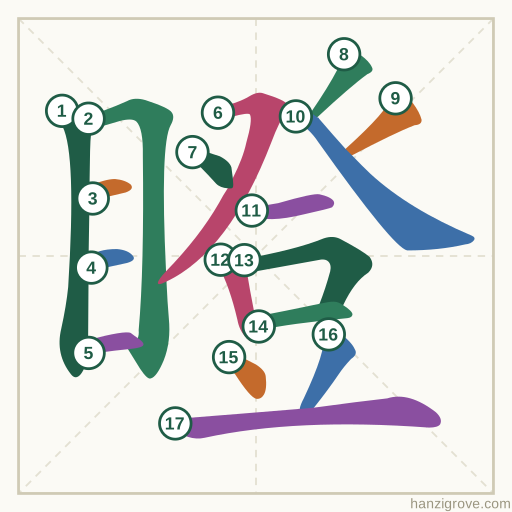
瞪 (dèng) means “to stare”. It is made of 目 + 登 and has 17 strokes, and is an old HSK 6 word (HSK 2.0).
Break 瞪 into its parts
What 瞪 is made of
- 目 mù — eye
- 口 kǒu — mouth
- 冂 — frame
- 一 — horizontal stroke
- 二 — two strokes
- 一 — horizontal stroke
- 一 — horizontal stroke
- 口 kǒu — mouth
- 登 dēng — to rise
- 癶 bō — legs
- 豆 dòu — beans
- 一 — horizontal stroke
- 口 kǒu — mouth
- 丷 ha — kwukyel
- 一 — horizontal stroke
瞪 stroke order
Example sentences
他生气地瞪了我一眼。Tā shēngqì de dèng le wǒ yī yǎn.He glared at me angrily.
孩子瞪着大眼睛看着我。Háizi dèng zhe dà yǎnjing kànzhe wǒ.The child stared at me with wide eyes.
Also built with 目
- 具jùtool
- 冒màoto risk
- 泪lèitears
- 盯dīngto stare at
- 盲mángblind
- 直zhístraight
- 相xiāngmutual
- 盼pànto look
- 省shěngto save
- 眉méieyebrows
- 看kànto look
- 眠miánsleep
Quick facts
| Pinyin | dèng |
|---|---|
| Meaning | to stare; to glare; to open (eyes) wide |
| Strokes | 17 |
| Pattern | Left–right |
| HSK | Old HSK 6 |
Questions about 瞪
What does 瞪 mean?
瞪 (dèng) means “to stare; to glare; to open (eyes) wide”.
How many strokes does 瞪 have?
瞪 has 17 strokes.
What parts make up 瞪?
瞪 is made of 目 (eye) and 登 (to rise).
Which HSK level is 瞪?
瞪 is in Old HSK 6.
Learn 瞪 with its group
It is part of Old HSK 6 · Group 41: a short group with quick checks and spaced repeats.