
秃
秃 (tū) means “bald”. It is made of 禾 + 几 and has 7 strokes, and is an old HSK 6 word (HSK 2.0).
Break 秃 into its parts
What 秃 is made of
- 禾 hé — cereal
- 丿 — falling stroke
- 木 mù — tree
- 十 — ten
- 八 bā — eight
- 几 jǐ — small table
- 丿 — falling stroke
- 乙 yǐ — second
秃 stroke order
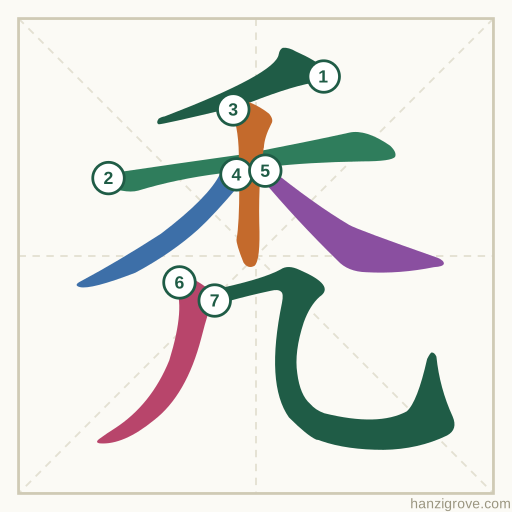
Example sentences
爷爷的头已经秃了。Yéye de tóu yǐjīng tū le.Grandpa has gone bald.
冬天的树枝都秃了。Dōngtiān de shùzhī dōu tū le.In winter the branches are all bare.
Also built with 禾
- 乘chéngto ride (a vehicle)
- 利lìgains
- 和héand
- 委wěito appoint
- 季jìseason
- 秀xiùelegant
- 私sīpersonal
- 秋qiūautumn
- 种zhǒngkind
- 科kēsubject
- 秒miǎosecond (of time)
- 秘mìsecret
Quick facts
| Pinyin | tū |
|---|---|
| Meaning | bald; bare |
| Strokes | 7 |
| Pattern | Top–bottom |
| HSK | Old HSK 6 |
Questions about 秃
What does 秃 mean?
秃 (tū) means “bald; bare”.
How many strokes does 秃 have?
秃 has 7 strokes.
What parts make up 秃?
秃 is made of 禾 (cereal) and 几 (small table).
Which HSK level is 秃?
秃 is in Old HSK 6.
Learn 秃 with its group
It is part of Old HSK 6 · Group 182: a short group with quick checks and spaced repeats.