
秋
秋 (qiū) means “autumn”. It is made of 禾 + 火 and has 9 strokes, and is an old HSK 3 word (HSK 2.0).
Break 秋 into its parts
What 秋 is made of
- 禾 hé — cereal
- 丿 — falling stroke
- 木 mù — tree
- 十 — ten
- 八 bā — eight
- 火 huǒ — fire
- 丷 ha — kwukyel
- 丶 — dot
- 人 rén — person
- 丷 ha — kwukyel
Origin hint: The time of year when farmers would burn 禾 crops 火 (from the Make Me a Hanzi dataset; treat as a memory aid where history is uncertain)
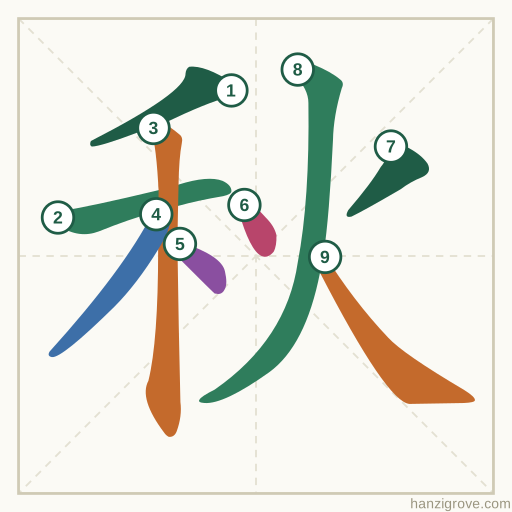
秋 stroke order
Example sentences
秋天的天气很舒服。Qiūtiān de tiānqì hěn shūfu.The weather in autumn is very pleasant.
秋天是去北京的好季节。Qiūtiān shì qù Běijīng de hǎo jìjié.Autumn is a good season to visit Beijing.
Words with 秋
Also built with 禾
- 乘chéngto ride (a vehicle)
- 利lìgains
- 和héand
- 委wěito appoint
- 季jìseason
- 秀xiùelegant
- 私sīpersonal
- 秃tūbald
- 种zhǒngkind
- 科kēsubject
- 秒miǎosecond (of time)
- 秘mìsecret
Quick facts
| Pinyin | qiū |
|---|---|
| Meaning | autumn; fall |
| Strokes | 9 |
| Radical | 禾 (grain, #115) |
| Pattern | Left–right |
| HSK | Old HSK 3 |
Questions about 秋
What does 秋 mean?
秋 (qiū) means “autumn; fall”.
How many strokes does 秋 have?
秋 has 9 strokes.
What is the radical of 秋?
The radical of 秋 is 禾 (hé, “grain”), Kangxi radical number 115.
What parts make up 秋?
秋 is made of 禾 (cereal) and 火 (fire).
Which HSK level is 秋?
秋 is in Old HSK 3.
Learn 秋 with its group
It is part of Old HSK 3 · Group 19: a short group with quick checks and spaced repeats.