
竖
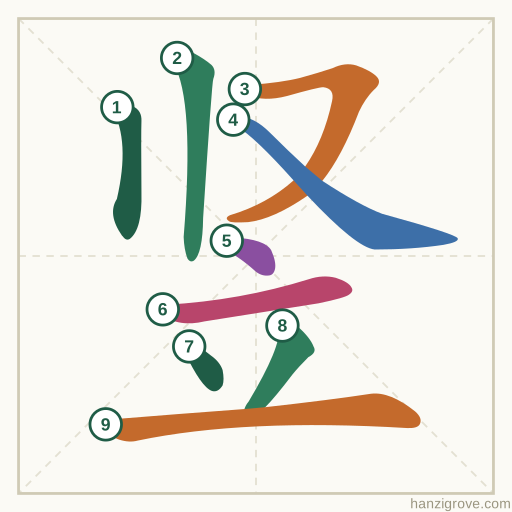
竖 (shù) means “to stand upright”. It is made of 刂 + 又 + 立 and has 9 strokes, and is an old HSK 6 word (HSK 2.0).
Break 竖 into its parts
What 竖 is made of
- 刂 dāo — knife
- 丨 — vertical stroke
- 亅 — hook
- 又 yòu — and
- 立 lì — to stand
- 亠 tóu — lid
- 丶 — dot
- 一 — horizontal stroke
- 丷 ha — kwukyel
- 丶 — dot
- 一 — horizontal stroke
- 亠 tóu — lid
竖 stroke order
Example sentences
他把梯子竖在墙边。Tā bǎ tīzi shù zài qiángbiān.He stood the ladder up against the wall.
这个字的第二笔是竖。Zhège zì de dì'èr bǐ shì shù.The second stroke of this character is a vertical stroke.
Also built with ⿰
- 临línto draw near
- 丽lìbeautiful
- 众zhòngmultitude
- 先xiānfirst
- 册cèvolume
- 勿wùdo not (formal, on signs)
- 压yāto press
- 厨chúkitchen
- 品pǐnarticle
- 哭kūto cry
- 器qìdevice
- 坚jiānhard
Quick facts
| Pinyin | shù |
|---|---|
| Meaning | to stand upright; vertical; vertical stroke |
| Strokes | 9 |
| Pattern | Top–bottom |
| HSK | Old HSK 6 |
Questions about 竖
What does 竖 mean?
竖 (shù) means “to stand upright; vertical; vertical stroke”.
How many strokes does 竖 have?
竖 has 9 strokes.
What parts make up 竖?
竖 is made of 刂 (knife) and 又 (and) and 立 (to stand).
Which HSK level is 竖?
竖 is in Old HSK 6.
Learn 竖 with its group
It is part of Old HSK 6 · Group 170: a short group with quick checks and spaced repeats.