
苦
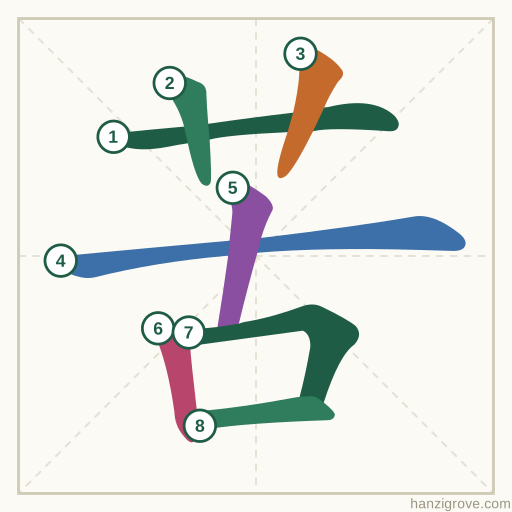
苦 (kǔ) means “bitter”. It is made of 艹 + 古 and has 8 strokes, and is an HSK 4 word in the current exam syllabus (2025).
Break 苦 into its parts
What 苦 is made of
- 艹 cǎo — grass
- 古 gǔ — ancient
- 十 — ten
- 一 — horizontal stroke
- 丨 — vertical stroke
- 口 kǒu — mouth
- 冂 — frame
- 一 — horizontal stroke
- 十 — ten
Origin hint: 艹 gives the meaning, 古 gives the sound. (from the Make Me a Hanzi dataset; treat as a memory aid where history is uncertain)
苦 stroke order
Example sentences
这个药很苦。Zhè ge yào hěn kǔ.This medicine is very bitter.
他小时候生活很苦。Tā xiǎoshíhou shēnghuó hěn kǔ.His life was very hard when he was little.
Words with 苦
- 痛苦tòngkǔpain
- 辛苦xīnkǔhard
- 艰苦jiānkǔhard
- 刻苦kèkǔhardworking
- 吃苦chīkǔto endure hardship
- 苦尽甘来kǔjìngānláiafter hardship comes happiness
- 苦涩kǔsèbitter
Also built with 艹
- 劳láoto labor
- 艺yìart
- 节jiémeasure word for classes
- 芒mángblade
- 花huāflower
- 芽yábud
- 苍cāngdark blue
- 苏sūto awaken
- 苗miáosprouts
- 苟gǒucareless
- 若ruòif
- 英yīngpetal
Quick facts
| Pinyin | kǔ |
|---|---|
| Meaning | bitter; hard (life); suffering |
| Strokes | 8 |
| Radical | 艸 (grass, #140) |
| Pattern | Top–bottom |
| HSK | HSK 4 (exam 2025) · HSK 4 (2021) · Old HSK 4 |
Questions about 苦
What does 苦 mean?
苦 (kǔ) means “bitter; hard (life); suffering”.
How many strokes does 苦 have?
苦 has 8 strokes.
What is the radical of 苦?
The radical of 苦 is 艸 (cǎo, “grass”), Kangxi radical number 140.
What parts make up 苦?
苦 is made of 艹 (grass) and 古 (ancient).
Which HSK level is 苦?
苦 is in HSK 4 (exam 2025) and HSK 4 (2021) and Old HSK 4.
Learn 苦 with its group
It is part of HSK 4 (2021) · Group 44: a short group with quick checks and spaced repeats.