
获
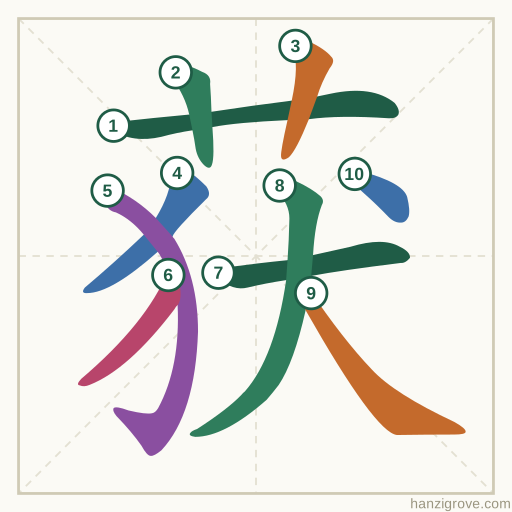
获 (huò) means “to win”. It is made of 艹 + 犾 and has 10 strokes, and is an HSK 4 word in the 2021 standard.
Break 获 into its parts
What 获 is made of
- 艹 cǎo — grass
- 犾 yín — structural part
- 犭 quǎn — dog
- 犬 quǎn — dog
- 大 dà — big
- 丶 — dot
获 stroke order
Example sentences
他今年获了一等奖。Tā jīnnián huò le yī děng jiǎng.He won first prize this year.
这次比赛谁获了第一?Zhè cì bǐsài shéi huò le dìyī?Who came first in this competition?
Words with 获
Also built with 艹
- 劳láoto labor
- 艺yìart
- 节jiémeasure word for classes
- 芒mángblade
- 花huāflower
- 芽yábud
- 苍cāngdark blue
- 苏sūto awaken
- 苗miáosprouts
- 苟gǒucareless
- 若ruòif
- 苦kǔbitter
Quick facts
| Pinyin | huò |
|---|---|
| Meaning | to win; to obtain |
| Strokes | 10 |
| Radical | 艸 (grass, #140) |
| Pattern | Top–bottom |
| HSK | HSK 4 (2021) |
Questions about 获
What does 获 mean?
获 (huò) means “to win; to obtain”.
How many strokes does 获 have?
获 has 10 strokes.
What is the radical of 获?
The radical of 获 is 艸 (cǎo, “grass”), Kangxi radical number 140.
What parts make up 获?
获 is made of 艹 (grass) and 犾 (structural part).
Which HSK level is 获?
获 is in HSK 4 (2021).
Learn 获 with its group
It is part of HSK 4 (2021) · Group 45: a short group with quick checks and spaced repeats.