
袱
袱 (fú) · apants
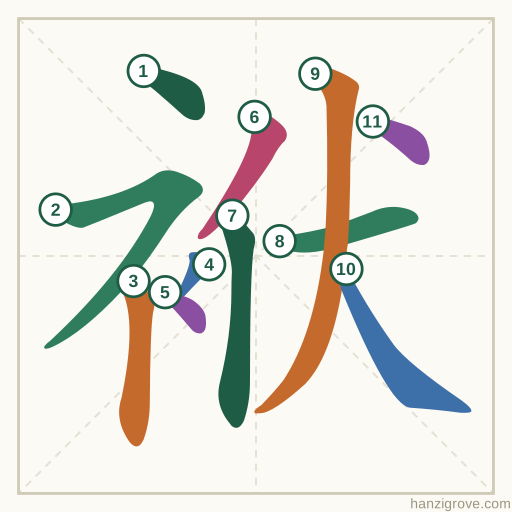
11 strokesLeft–right
袱 (fú) means “apants”. It is made of 衤 + 伏 and has 11 strokes.
Break 袱 into its parts
What 袱 is made of
- 衤 yī — clothing
- 伏 fú — to crouch
- 亻 rén — person
- 犬 quǎn — dog
- 大 dà — big
- 丶 — dot
袱 stroke order
Example sentences with 包袱
别把这件事当成思想包袱。Bié bǎ zhè jiàn shì dàngchéng sīxiǎng bāofu.Don't let this become a weight on your mind.
她背着一个小包袱出了门。Tā bēi zhe yī gè xiǎo bāofu chū le mén.She went out carrying a small bundle.
Words with 袱
Also built with 衤
- 初chūfirst (as in 初一)
- 补bǔto mend
- 衫shānshirt
- 衬chènunderwear
- 袍páorobe
- 袖xiùsleeve
- 袜wàsocks
- 被bèiby (marks the passive)
- 裕yùrich
- 裙qúnskirt
- 裤kùpants
Quick facts
| Pinyin | fú |
|---|---|
| Meaning | apants |
| Strokes | 11 |
| Pattern | Left–right |
Questions about 袱
What does 袱 mean?
袱 (fú) means “apants”.
How many strokes does 袱 have?
袱 has 11 strokes.
What parts make up 袱?
袱 is made of 衤 (clothing) and 伏 (to crouch).
Keep learning
Start with HSK 1 · Group 1: 10 words with quick checks and spaced repeats.