
贵
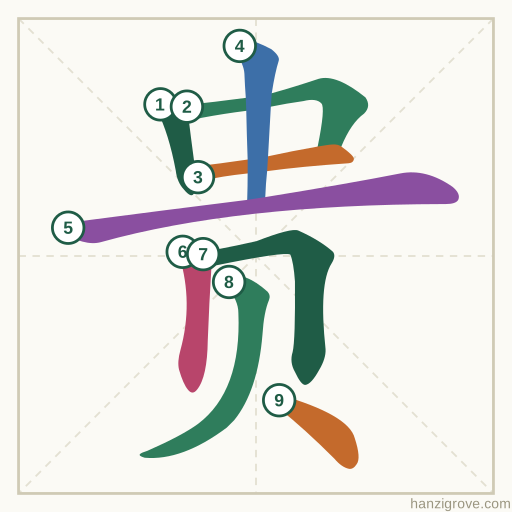
贵 (guì) means “expensive”. It is made of 中 + 一 + 贝 and has 9 strokes, and is an HSK 1 word in the current exam syllabus (2025).
Break 贵 into its parts
What 贵 is made of
- 中 zhōng — middle
- 口 kǒu — mouth
- 冂 — frame
- 一 — horizontal stroke
- 丨 — vertical stroke
- 口 kǒu — mouth
- 一 — horizontal stroke
- 贝 bèi — sea shell
- 冂 — frame
- 丨 — vertical stroke
- 人 rén — person
- 冂 — frame
Origin hint: money (from the Make Me a Hanzi dataset; treat as a memory aid where history is uncertain)
贵 stroke order
Example sentences
这个手机太贵了。Zhège shǒujī tài guì le.This phone is too expensive.
机票贵不贵?Jīpiào guì bù guì?Is the plane ticket expensive?
Words with 贵
- 宝贵bǎoguìvaluable
- 昂贵ángguìexpensive
- 贵族guìzúnobility
- 难能可贵nánnéngkěguìrare and commendable
- 珍贵zhēnguìprecious
Also built with ⿱
- 串chuànstring
- 乐lèhappy
- 亮liàngbright
- 伤shānginjury
- 侃kǎnupright and strong
- 其qíhis
- 具jùtool
- 兼jiānboth
- 兽shòubeast
- 前qiánfront
- 劳láoto labor
- 卸xièto unload
Quick facts
| Pinyin | guì |
|---|---|
| Meaning | expensive |
| Strokes | 9 |
| Radical | 貝 (shell, #154) |
| Pattern | Top–bottom |
| HSK | HSK 1 (exam 2025) · HSK 1 (2021) · Old HSK 2 |
Questions about 贵
What does 贵 mean?
贵 (guì) means “expensive”.
How many strokes does 贵 have?
贵 has 9 strokes.
What is the radical of 贵?
The radical of 贵 is 貝 (bèi, “shell”), Kangxi radical number 154.
What parts make up 贵?
贵 is made of 中 (middle) and 一 (horizontal stroke) and 贝 (sea shell).
Which HSK level is 贵?
贵 is in HSK 1 (exam 2025) and HSK 1 (2021) and Old HSK 2.
Learn 贵 with its group
It is part of HSK 1 (2021) · Group 4: a short group with quick checks and spaced repeats.