
趴
趴 (pā) means “to lie on one's stomach”. It is made of 足 + 八 and has 9 strokes, and is an old HSK 6 word (HSK 2.0).
Break 趴 into its parts
What 趴 is made of
- 足 zú — foot
- 口 kǒu — mouth
- 冂 — frame
- 一 — horizontal stroke
- 口 kǒu — mouth
- 八 bā — eight
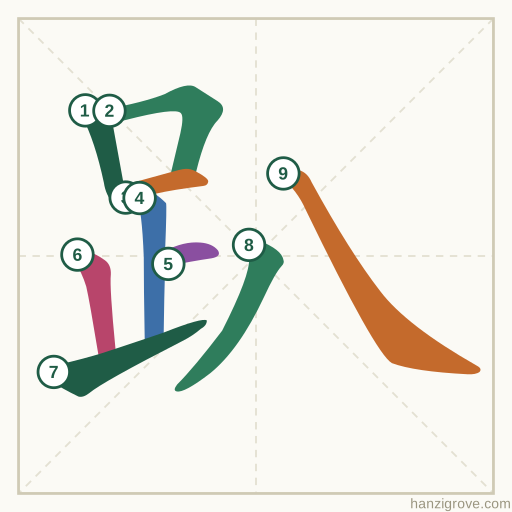
趴 stroke order
Example sentences
孩子趴在床上看书。Háizi pā zài chuáng shàng kànshū.The child is lying on his stomach on the bed, reading.
他太累了,趴在桌子上睡着了。Tā tài lèi le, pā zài zhuōzi shàng shuìzháo le.He was so tired he fell asleep slumped over the desk.
Also built with 足
- 促cùto urge
- 捉zhuōto clutch
- 跃yuèto skip
- 跌diēto fall
- 跑pǎoto run
- 距jùdistance
- 跟gēnwith
- 跨kuàto step across
- 跪guìto kneel
- 路lùroad
- 跳tiàoto jump
- 践jiànto trample
Quick facts
| Pinyin | pā |
|---|---|
| Meaning | to lie on one's stomach; to lean on |
| Strokes | 9 |
| Pattern | Left–right |
| HSK | Old HSK 6 |
Questions about 趴
What does 趴 mean?
趴 (pā) means “to lie on one's stomach; to lean on”.
How many strokes does 趴 have?
趴 has 9 strokes.
What parts make up 趴?
趴 is made of 足 (foot) and 八 (eight).
Which HSK level is 趴?
趴 is in Old HSK 6.
Learn 趴 with its group
It is part of Old HSK 6 · Group 133: a short group with quick checks and spaced repeats.