
跪
跪 (guì) means “to kneel”. It is made of 足 + 危 and has 13 strokes, and is an old HSK 6 word (HSK 2.0).
Break 跪 into its parts
What 跪 is made of
- 足 zú — foot
- 口 kǒu — mouth
- 冂 — frame
- 一 — horizontal stroke
- 口 kǒu — mouth
- 危 wēi — dangerous
- 厃 wěi — to look upward
- ⺈ — top shape
- 厂 chǎng — cliff
- 㔾 xiān — seal
- 厃 wěi — to look upward
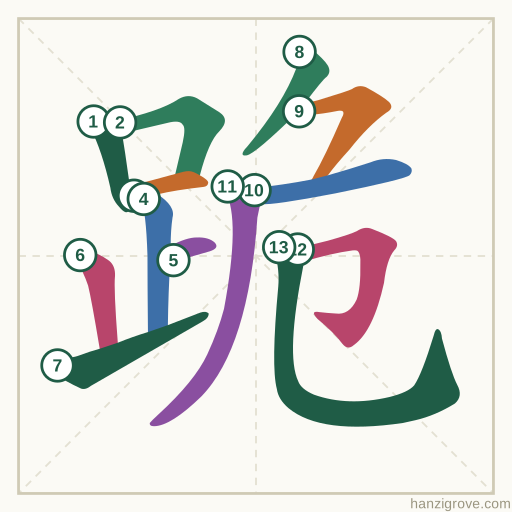
跪 stroke order
Example sentences
他跪在地上找东西。Tā guì zài dìshàng zhǎo dōngxi.He knelt on the ground looking for something.
古时候,人们见到皇帝要下跪。Gǔ shíhou, rénmen jiàndào huángdì yào xiàguì.In ancient times, people had to kneel before the emperor.
Also built with 足
- 促cùto urge
- 捉zhuōto clutch
- 趴pāto lie on one's stomach
- 跃yuèto skip
- 跌diēto fall
- 跑pǎoto run
- 距jùdistance
- 跟gēnwith
- 跨kuàto step across
- 路lùroad
- 跳tiàoto jump
- 践jiànto trample
Quick facts
| Pinyin | guì |
|---|---|
| Meaning | to kneel |
| Strokes | 13 |
| Pattern | Left–right |
| HSK | Old HSK 6 |
Questions about 跪
What does 跪 mean?
跪 (guì) means “to kneel”.
How many strokes does 跪 have?
跪 has 13 strokes.
What parts make up 跪?
跪 is made of 足 (foot) and 危 (dangerous).
Which HSK level is 跪?
跪 is in Old HSK 6.
Learn 跪 with its group
It is part of Old HSK 6 · Group 73: a short group with quick checks and spaced repeats.