
配
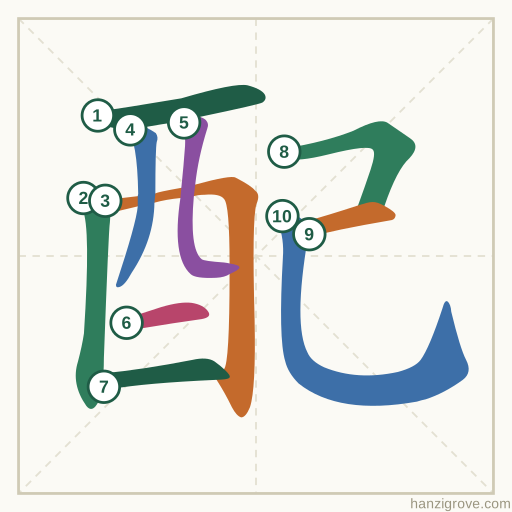
配 (pèi) means “to match”. It is made of 酉 + 己 and has 10 strokes, and is an HSK 3 word in the 2021 standard.
Break 配 into its parts
What 配 is made of
- 酉 yǒu — wine
- 兀 wù — weak
- 一 — horizontal stroke
- 儿 ér — child
- 日 rì — sun; day
- 口 kǒu — mouth
- 一 — horizontal stroke
- 兀 wù — weak
- 己 jǐ — self
- 乚 — hook stroke
Origin hint: 酉 gives the meaning, 己 gives the sound. (from the Make Me a Hanzi dataset; treat as a memory aid where history is uncertain)
配 stroke order
Example sentences
这件衬衫配什么裤子好?Zhè jiàn chènshān pèi shénme kùzi hǎo?What trousers go well with this shirt?
这双鞋配你的裙子很好看。Zhè shuāng xié pèi nǐ de qúnzi hěn hǎokàn.These shoes go nicely with your skirt.
Words with 配
- 分配fēnpèito assign
- 配合pèihéto cooperate
- 搭配dāpèito match
- 配备pèibèito equip
- 配偶pèi'ǒuspouse
- 配套pèitàomatching
- 支配zhīpèito control
Also built with 酉
- 酌zhuóto pour wine
- 酒jiǔalcohol
- 酗xùviolent
- 酝yùnliquor
- 酬chóuto toast
- 酱jiàngsauce
- 酷kùstrong
- 酸suānsour
- 酿niàngto ferment
- 醉zuìdrunk
- 醋cùvinegar
- 醒xǐngto wake up
Quick facts
| Pinyin | pèi |
|---|---|
| Meaning | to match; to go with; to be worthy of |
| Strokes | 10 |
| Radical | 酉 (wine, #164) |
| Pattern | Left–right |
| HSK | HSK 3 (2021) |
Questions about 配
What does 配 mean?
配 (pèi) means “to match; to go with; to be worthy of”.
How many strokes does 配 have?
配 has 10 strokes.
What is the radical of 配?
The radical of 配 is 酉 (yǒu, “wine”), Kangxi radical number 164.
What parts make up 配?
配 is made of 酉 (wine) and 己 (self).
Which HSK level is 配?
配 is in HSK 3 (2021).
Learn 配 with its group
It is part of HSK 3 (2021) · Group 40: a short group with quick checks and spaced repeats.