
醒
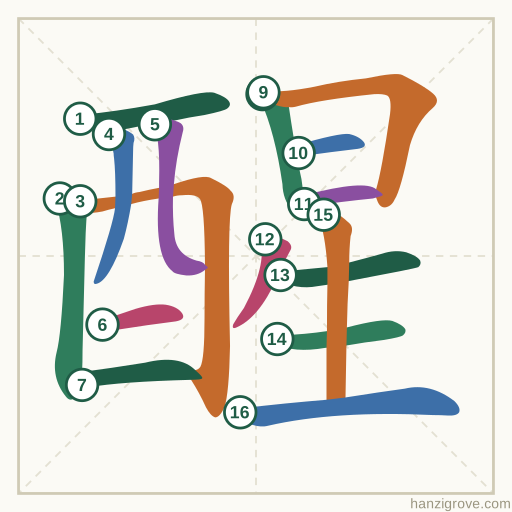
醒 (xǐng) means “to wake up”. It is made of 酉 + 星 and has 16 strokes, and is an HSK 4 word in the current exam syllabus (2025).
Break 醒 into its parts
What 醒 is made of
- 酉 yǒu — wine
- 兀 wù — weak
- 一 — horizontal stroke
- 儿 ér — child
- 日 rì — sun; day
- 口 kǒu — mouth
- 一 — horizontal stroke
- 兀 wù — weak
- 星 xīng — star
- 日 rì — sun; day
- 口 kǒu — mouth
- 一 — horizontal stroke
- 生 shēng — life
- 一 — horizontal stroke
- 土 tǔ — earth
- 日 rì — sun; day
Origin hint: 酉 gives the meaning, 星 gives the sound. (from the Make Me a Hanzi dataset; treat as a memory aid where history is uncertain)
醒 stroke order
Example sentences
我早上六点就醒了。Wǒ zǎoshang liù diǎn jiù xǐng le.I woke up at six in the morning.
他怎么还没醒呢?Tā zěnme hái méi xǐng ne?Why isn't he awake yet?
Words with 醒
Also built with 酉
- 酌zhuóto pour wine
- 配pèito match
- 酒jiǔalcohol
- 酗xùviolent
- 酝yùnliquor
- 酬chóuto toast
- 酱jiàngsauce
- 酷kùstrong
- 酸suānsour
- 酿niàngto ferment
- 醉zuìdrunk
- 醋cùvinegar
Quick facts
| Pinyin | xǐng |
|---|---|
| Meaning | to wake up; to be awake; to become aware |
| Strokes | 16 |
| Radical | 酉 (wine, #164) |
| Pattern | Left–right |
| HSK | HSK 4 (exam 2025) · HSK 4 (2021) · Old HSK 4 |
Questions about 醒
What does 醒 mean?
醒 (xǐng) means “to wake up; to be awake; to become aware”.
How many strokes does 醒 have?
醒 has 16 strokes.
What is the radical of 醒?
The radical of 醒 is 酉 (yǒu, “wine”), Kangxi radical number 164.
What parts make up 醒?
醒 is made of 酉 (wine) and 星 (star).
Which HSK level is 醒?
醒 is in HSK 4 (exam 2025) and HSK 4 (2021) and Old HSK 4.
Learn 醒 with its group
It is part of HSK 4 (2021) · Group 23: a short group with quick checks and spaced repeats.