
释
释 (shì) · to explain
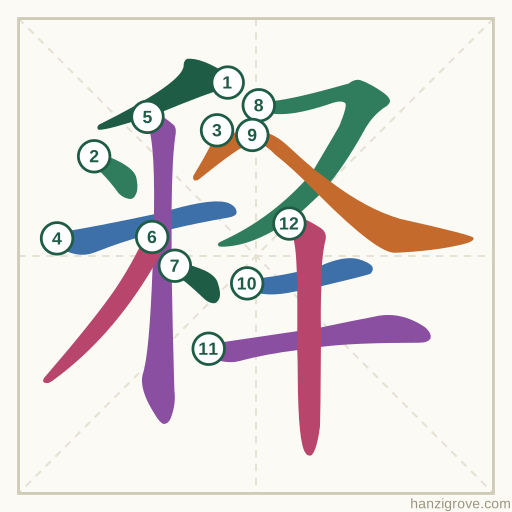
释 (shì) means “to explain”. It is made of 釆 and has 12 strokes.
Break 释 into its parts
What 释 is made of
- 釆 biàn — to distinguish
- 丿 — falling stroke
- 米 mǐ — rice
- 丷 ha — kwukyel
- 木 mù — tree
Origin hint: 釆 gives the meaning, 睪 gives the sound. (from the Make Me a Hanzi dataset; treat as a memory aid where history is uncertain)
释 stroke order
Example sentences with 解释
请你解释一下这个词。Qǐng nǐ jiěshì yīxià zhège cí.Please explain this word.
他向老师解释了迟到的原因。Tā xiàng lǎoshī jiěshì le chídào de yuányīn.He explained to the teacher why he was late.
Words with 释
- 解释jiěshìto explain
- 爱不释手àibùshìshǒuto love something too much to put it down
- 释放shìfàngto release
- 注释zhùshìnote
Also built with 釆
Quick facts
| Pinyin | shì |
|---|---|
| Meaning | to explain |
| Strokes | 12 |
| Radical | 釆 (distinguish, #165) |
| Pattern | Left–right |
Questions about 释
What does 释 mean?
释 (shì) means “to explain”.
How many strokes does 释 have?
释 has 12 strokes.
What is the radical of 释?
The radical of 释 is 釆 (biàn, “distinguish”), Kangxi radical number 165.
What parts make up 释?
释 is made of 釆 (to distinguish).
Keep learning
Start with HSK 1 · Group 1: 10 words with quick checks and spaced repeats.