
颇
颇 (pō) means “quite”. It is made of 皮 + 页 and has 11 strokes, and is an old HSK 6 word (HSK 2.0).
Break 颇 into its parts
What 颇 is made of
- 皮 pí — skin
- 攴 pū — to rap
- 页 yè — page
- 贝 bèi — sea shell
- 冂 — frame
- 人 rén — person
- 贝 bèi — sea shell
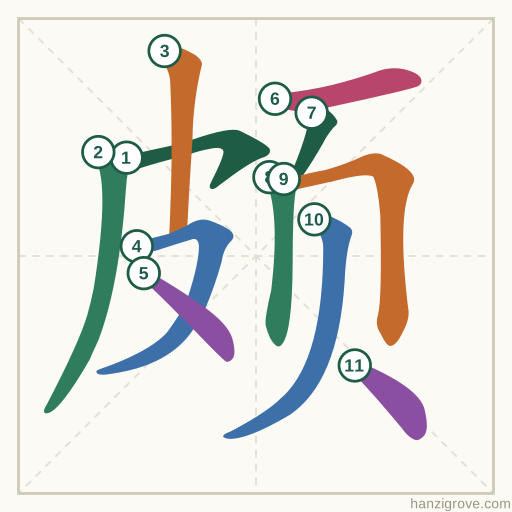
颇 stroke order
Example sentences
这本书颇受读者欢迎。Zhè běn shū pō shòu dúzhě huānyíng.This book is quite popular with readers.
他对这个问题颇有研究。Tā duì zhège wèntí pō yǒu yánjiū.He has studied this question in considerable depth.
Also built with 皮
- 坡pōslope
- 彼bǐthat
- 披pīto drape over the shoulders
- 波bōwaves
- 玻bōglass
- 疲píweak
- 皱zhòuwrinkles
- 破pòbroken
- 被bèiby (marks the passive)
Quick facts
| Pinyin | pō |
|---|---|
| Meaning | quite; rather; considerably |
| Strokes | 11 |
| Pattern | Left–right |
| HSK | Old HSK 6 |
Questions about 颇
What does 颇 mean?
颇 (pō) means “quite; rather; considerably”.
How many strokes does 颇 have?
颇 has 11 strokes.
What parts make up 颇?
颇 is made of 皮 (skin) and 页 (page).
Which HSK level is 颇?
颇 is in Old HSK 6.
Learn 颇 with its group
It is part of Old HSK 6 · Group 139: a short group with quick checks and spaced repeats.