
馋
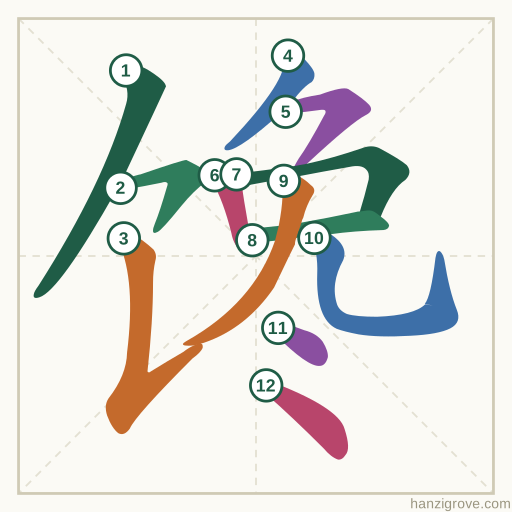
馋 (chán) means “greedy (for food)”. It is made of 饣 + 兔 and has 12 strokes, and is an old HSK 6 word (HSK 2.0).
Break 馋 into its parts
What 馋 is made of
- 饣 shí — food
- 乚 — hook stroke
- 兔 tù — rabbit
馋 stroke order
Example sentences
闻到香味,我就馋了。Wéndào xiāngwèi, wǒ jiù chán le.Smelling it made my mouth water.
这个孩子很馋,总想吃糖。Zhège háizi hěn chán, zǒng xiǎng chī táng.This child is greedy for sweets.
Also built with 饣
- 蚀shíto nibble at
- 饥jīhungry
- 饪rèncooked food
- 饭fànmeal
- 饮yǐnto swallow
- 饰shìto decorate
- 饱bǎofull (after eating)
- 饲sìto raise animals
- 饶ráoabundant
- 饺jiǎostuffed dumplings
- 饼bǐngrice-cake
- 饿èhungry
Quick facts
| Pinyin | chán |
|---|---|
| Meaning | greedy (for food); to crave |
| Strokes | 12 |
| Pattern | Left–right |
| HSK | Old HSK 6 |
Questions about 馋
What does 馋 mean?
馋 (chán) means “greedy (for food); to crave”.
How many strokes does 馋 have?
馋 has 12 strokes.
What parts make up 馋?
馋 is made of 饣 (food) and 兔 (rabbit).
Which HSK level is 馋?
馋 is in Old HSK 6.
Learn 馋 with its group
It is part of Old HSK 6 · Group 22: a short group with quick checks and spaced repeats.