
Chinese character for eye: 眼 (yǎn)
The Chinese character for eye is 眼 (yǎn). It is the everyday character for the eye, as in 眼睛 (yǎnjing, eye) and 眼泪 (yǎnlèi, tears). The older pictograph 目 (mù) also means eye and is used in compounds.
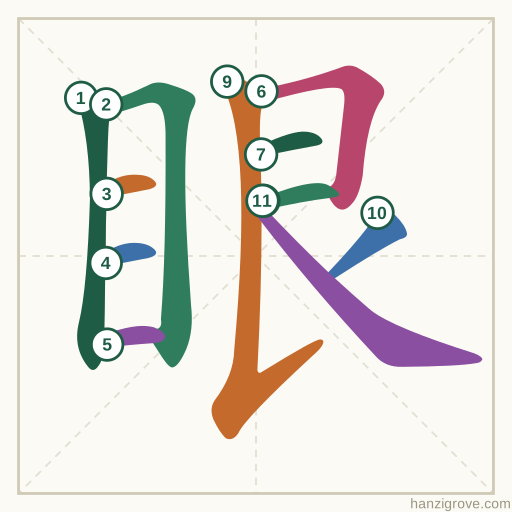
How 眼 is built
眼 joins 目 (mù) on the left, which is the eye radical, with 艮 (gèn) on the right, which gives the sound. 目 itself is a pictograph of an eye turned on its side: the outer frame is the eye and the lines inside are the pupil. As a part of other characters, 目 marks seeing and looking, as in 看 (to look), where a hand 手 shades the eye. 眼 is identical in both scripts.
眼 yǎn · eye
- 目mù — eye
- 口kǒu — mouth
- 冂 — frame
- 一 — horizontal stroke
- 二 — two strokes
- 一 — horizontal stroke
- 一 — horizontal stroke
- 口kǒu — mouth
- 艮gěn — blunt
Origin hint: 目 gives the meaning, 艮 gives the sound. (from the Make Me a Hanzi dataset; treat as a memory aid where history is uncertain)
How 眼 is used
Other ways to say eye
- 目 mù — eye as a pictograph, used in written compounds like 目光 (gaze)
- 眼睛 yǎnjing — the everyday spoken word for eye
Before you use it as a tattoo or design: Many tattoo seekers like the pictograph 目, while 眼 is the everyday character; both are identical in the two scripts.
Questions
What is the Chinese character for eye?
眼 (yǎn) means “eye”.
How do you pronounce 眼?
眼 is pronounced yǎn.