
Chinese character for fish: 鱼 (yú)
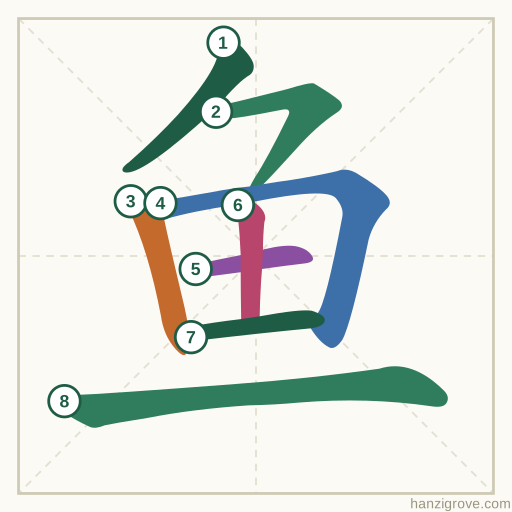
The Chinese character for fish is 鱼 (yú). It means fish and appears in 金鱼 (jīnyú, goldfish) and 钓鱼 (diàoyú, fishing). Because 鱼 sounds like 余 (yú, surplus), fish are a symbol of abundance at Chinese New Year.
How 鱼 is built
The traditional form 魚 is a pictograph of a fish: the top is the head, 田 is the scaly body, and the four dots at the bottom are the tail fins. The simplified 鱼 replaces the four dots with a single line. As a part of other characters it marks fish names, as in 鲨 (shark). The New Year saying 年年有余 (abundance every year) plays on its sound.
鱼 yú · fish
- ⺈ — top shape
- 田tián — field
- 冂 — frame
- 丨 — vertical stroke
- 土tǔ — earth
- 十 — ten
- 一 — horizontal stroke
- 冂 — frame
- 一 — horizontal stroke
Origin hint: A fish swimming upwards (from the Make Me a Hanzi dataset; treat as a memory aid where history is uncertain)
How 鱼 is used
Before you use it as a tattoo or design: Traditional 魚 keeps the four tail dots and looks more like a fish; simplified 鱼 is the modern form.
Questions
What is the Chinese character for fish?
鱼 (yú) means “fish”. In traditional characters it is written 魚.
How do you pronounce 鱼?
鱼 is pronounced yú.
Is 鱼 simplified or traditional?
鱼 is the simplified form used in mainland China and Singapore; 魚 is the traditional form used in Taiwan and Hong Kong.