
Chinese character for wealth: 财 (cái)
The Chinese character for wealth is 财 (cái). It means money, riches and property, and appears in 财富 (cáifù, wealth) and 发财 (fācái, to get rich). At Chinese New Year people say 恭喜发财 (gōngxǐ fācái), wishing each other prosperity.
How 财 is built
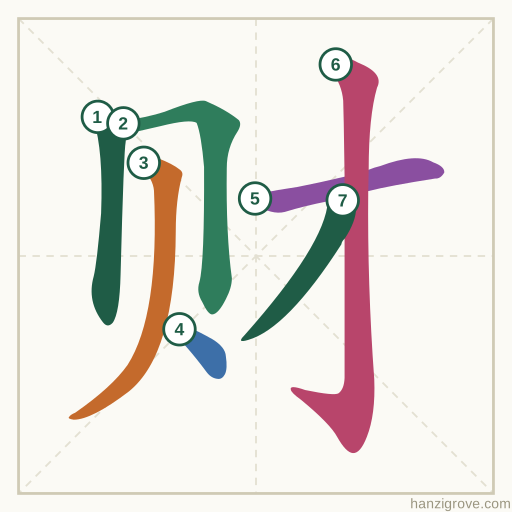
财 joins 贝 (bèi), a cowrie shell, with 才 (cái), which gives the sound. Cowrie shells were used as money in ancient China, so 贝 appears in many characters about money and value, such as 贵 (expensive) and 买 (buy). The traditional form 財 writes the shell in full as 貝. As a memory aid, wealth is a pile of shells, the oldest Chinese money.
财 cái · riches
- 贝bèi — sea shell
- 冂 — frame
- 丨 — vertical stroke
- 人rén — person
- 冂 — frame
- 才cái — ability
- 扌shǒu — hand
- 二 — two strokes
- 亅 — hook
- 扌shǒu — hand
Origin hint: 贝 gives the meaning, 才 gives the sound. (from the Make Me a Hanzi dataset; treat as a memory aid where history is uncertain)
How 财 is used
Other ways to say wealth
- 富 fù — rich, wealthy (describing a person or country)
- 财富 cáifù — wealth, fortune
Before you use it as a tattoo or design: 财 reads as money, which some people find too material for a tattoo; 福 (good fortune) is a softer choice.
Questions
What is the Chinese character for wealth?
财 (cái) means “wealth”. In traditional characters it is written 財.
How do you pronounce 财?
财 is pronounced cái.
Is 财 simplified or traditional?
财 is the simplified form used in mainland China and Singapore; 財 is the traditional form used in Taiwan and Hong Kong.